
Knowing how many grams are in a teaspoon can make your cooking and baking much more accurate. However, there isn’t one simple answer because a teaspoon measures volume, while grams measure weight.
The number of grams per teaspoon changes depending on the ingredient’s density. For example, 1 teaspoon of sugar weighs differently than 1 teaspoon of flour or 1 teaspoon of salt. That’s why using a reliable teaspoon to grams conversion is important when following recipes.
In this guide, you’ll find an easy-to-use conversion chart, practical cooking measurements, and simple tips for converting teaspoons to grams and grams to teaspoons. Whether you’re measuring baking ingredients, spices, or liquids, this guide will help you make accurate ingredient conversions with confidence and improve the consistency of your favorite recipes.
Quick Answer
There isn’t a single answer because a teaspoon measures volume, while grams measure weight. The exact grams in a teaspoon depend on the ingredient’s density. For example, 1 teaspoon of water weighs about 5 grams, granulated sugar weighs about 4.2 grams, and all-purpose flour weighs about 2.6 grams. Using an ingredient-specific conversion chart gives the most accurate results for cooking and baking.
Why One Teaspoon Doesn’t Always Equal the Same Number of Grams
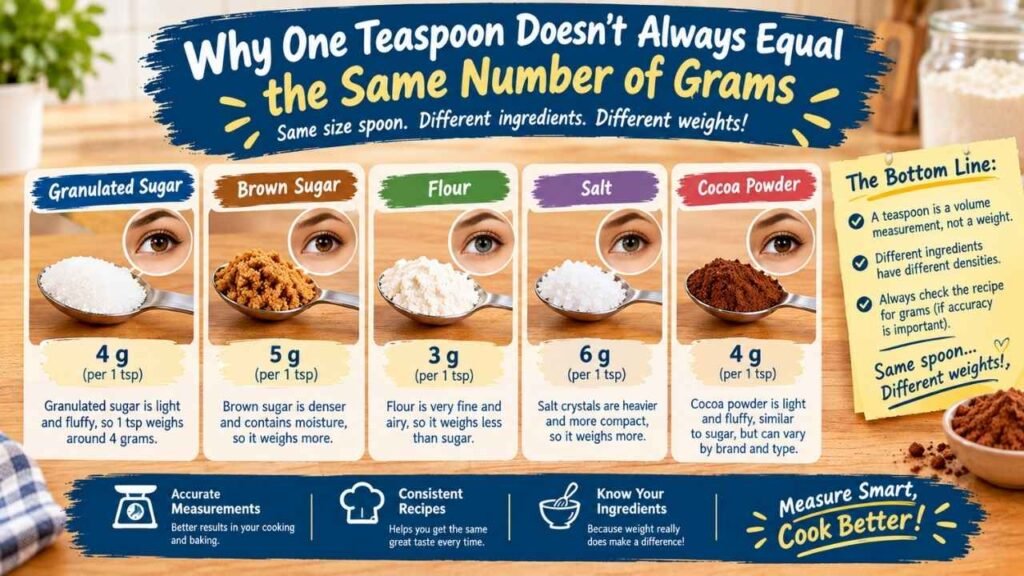
Many people think 1 teaspoon always equals the same number of grams, but that is not true. A teaspoon measures volume (5 mL), while grams measure weight. The final weight depends on the ingredient’s density.
For example, 1 teaspoon of honey is heavier than 1 teaspoon of flour because honey is denser. Likewise, salt, sugar, butter, and oil all have different weights even when measured with the same teaspoon.
This is why there is no universal teaspoon to grams conversion for every ingredient. If you want accurate cooking measurements or baking measurements, always use an ingredient conversion chart or a digital kitchen scale instead of guessing.
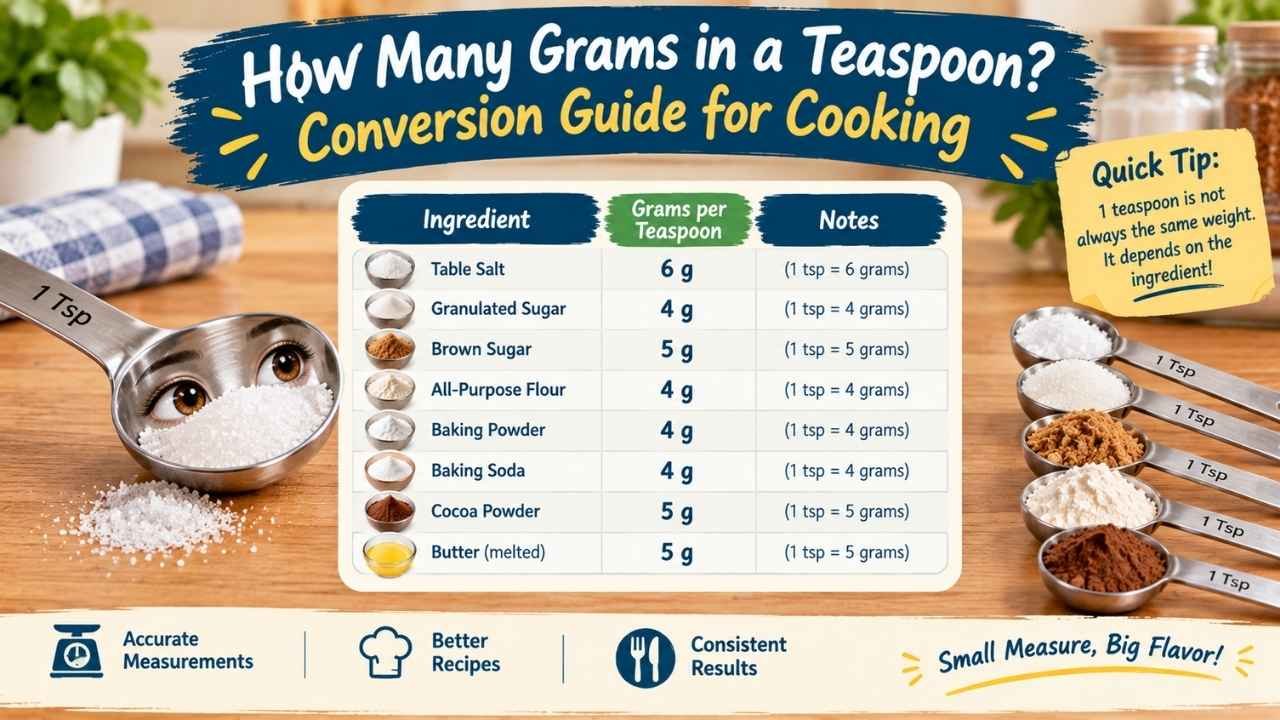
Grams in One Teaspoon Conversion Chart
The easiest way to find how many grams are in a teaspoon is by using a conversion chart. Since every ingredient has a different density, the weight changes from one food to another. Below are some of the most common ingredient conversions used in everyday cooking and baking. These values are approximate but accurate enough for most recipes.
If you often work with recipe measurements, keeping a kitchen conversion chart nearby can save time and improve consistency. You may also find our guides on Tablespoons in 1/3 Cup, Tablespoons in 1/4 Cup, and 200 C to Fahrenheit helpful when converting other common kitchen measurements.
How to Convert Teaspoons to Grams
Converting teaspoons to grams is simple once you know the ingredient’s density. Since a teaspoon measures volume and grams measure weight, there is no single conversion that works for every ingredient. The basic formula is:
Grams = Teaspoons × 5 × Ingredient Density (g/mL)
For everyday cooking, you don’t need to calculate the density yourself. Instead, use a reliable teaspoon to grams conversion chart for the ingredient you are measuring. For example, 1 teaspoon of water equals about 5 grams, 1 teaspoon of granulated sugar is about 4.2 grams, while 1 teaspoon of all-purpose flour is about 2.6 grams.
Using the correct ingredient conversion helps improve recipe accuracy, especially in baking where precise measurements make a noticeable difference.
How to Convert Grams to Teaspoons
If your recipe lists ingredients in grams, you can convert them back into teaspoons by dividing the weight by the ingredient’s weight per teaspoon. Because every ingredient has a different density, always use the correct value instead of assuming that 1 teaspoon equals 5 grams. The formula is:
Teaspoons = Grams ÷ Weight of 1 Teaspoon of the Ingredient
For example, if you have 8.4 grams of granulated sugar, divide it by 4.2, which equals 2 teaspoons. If you have 5.2 grams of all-purpose flour, divide it by 2.6, giving you 2 teaspoons. Using an ingredient-specific conversion chart ensures accurate cooking measurements and baking measurements, helping your recipes turn out consistently every time.
Ingredient-Specific Conversions
The number of grams in a teaspoon changes with every ingredient because each one has a different density. While a teaspoon always measures 5 mL of volume, the weight in grams depends on whether you are measuring a dry or liquid ingredient.
For example, 1 teaspoon of sugar weighs less than 1 teaspoon of honey, while 1 teaspoon of flour weighs much less than 1 teaspoon of salt. This is why using an ingredient-specific conversion chart is the best way to get accurate cooking measurements and baking measurements.
Below are some of the most common teaspoon to grams conversions used in everyday recipes. These values are approximate and work well for most home cooking and baking.
Sugar
Granulated sugar weighs about 4.2 grams per teaspoon, making it one of the most common ingredients in baking. If a recipe calls for 2 teaspoons of sugar, you’ll need about 8.4 grams. Since sugar crystals have a consistent size, its weight is fairly reliable. Measuring sugar in grams instead of teaspoons gives better accuracy, especially when making cakes, cookies, or desserts.
Flour
All-purpose flour weighs about 2.6 grams per teaspoon. Flour is much lighter than sugar because it contains more air. Scooping flour directly from the bag can pack it tightly, making it heavier than expected. For the best results, lightly spoon the flour into the measuring spoon and level it off. Using grams is the preferred method for consistent baking.
Salt
Table salt weighs about 6 grams per teaspoon, making it one of the heaviest common kitchen ingredients. Fine salt packs more tightly than coarse or flaky salt, so the weight can vary slightly. Always check the type of salt your recipe uses before converting teaspoons to grams to avoid over-seasoning your food.
Butter
Butter weighs about 4.7 grams per teaspoon. Whether you’re using melted or softened butter, measuring by grams provides better accuracy than using teaspoons. This is especially important in baking, where the right amount of fat affects texture, moisture, and flavor.
Honey
Honey weighs about 7 grams per teaspoon because it is much denser than water or sugar. Even a small difference in measurement can affect the sweetness and moisture of a recipe. If you frequently bake with honey, using a kitchen scale is the easiest way to ensure accurate results.
Baking Powder
Baking powder weighs about 4 grams per teaspoon. Since it is a leavening agent, measuring the correct amount is important for cakes, muffins, and quick breads. Too much or too little can change how your baked goods rise and affect their texture.
Baking Soda
Baking soda weighs around 4.8 to 5 grams per teaspoon. It reacts quickly with acidic ingredients, so accurate measurements are essential. Using an ingredient conversion chart helps you avoid mistakes and keeps your baking consistent.
Cocoa Powder
Unsweetened cocoa powder weighs about 2.5 grams per teaspoon. Because cocoa is light and fluffy, avoid pressing it into the spoon. Gently fill the spoon and level the top for a more accurate measurement, or weigh it in grams whenever possible.
Oil
Most vegetable oils and olive oil weigh about 4.5 grams per teaspoon. Since oils are liquids, they are easier to measure accurately than many dry ingredients. Converting grams to teaspoons or teaspoons to grams is helpful when following international recipes.
Water
Water is the simplest ingredient to convert because 1 teaspoon of water equals about 5 grams. This standard is often used as a reference when comparing the weight of other ingredients. However, remember that most foods do not weigh the same as water, so always use the correct grams per teaspoon value for each ingredient.
Measuring Dry vs. Liquid Ingredients Correctly
Using the right measuring method is just as important as knowing how many grams are in a teaspoon. Dry ingredients like flour, cocoa powder, and baking soda should be lightly spooned into the measuring spoon and then leveled with a straight edge. Packing them down can increase their weight and affect your recipe.
Liquid ingredients such as water, milk, oil, and vanilla extract naturally settle into the spoon, making them easier to measure accurately.
For the best cooking measurements and baking measurements, use dry measuring spoons for dry ingredients and liquid measuring tools for larger amounts of liquids. Whenever possible, measure ingredients in grams with a digital kitchen scale for the most consistent and reliable results.
Why Professional Bakers Prefer Grams
Professional bakers almost always measure ingredients in grams instead of teaspoons or cups because it provides better accuracy. Even a small difference in the amount of flour, sugar, or baking powder can change the texture, flavor, and appearance of baked goods.
Measuring by weight removes guesswork and gives consistent results every time. It also makes it easier to scale recipes up or down without affecting the final product. While teaspoons are convenient for everyday cooking, a digital kitchen scale is the preferred tool for baking.
If you want your cakes, cookies, breads, and pastries to turn out the same every time, measuring ingredients in grams is the best practice.
Common Conversion Mistakes to Avoid
Converting teaspoons to grams is easy when you use the correct information, but a few common mistakes can lead to inaccurate results. The biggest mistake is assuming that 1 teaspoon always equals 5 grams.
While this is true for water, it is not correct for ingredients like flour, sugar, salt, or honey because each has a different density. Another mistake is packing dry ingredients into the measuring spoon instead of lightly filling and leveling them.
Using the wrong measuring spoon size can also affect the final weight. To improve recipe accuracy, always use an ingredient-specific conversion chart or measure ingredients with a digital kitchen scale whenever possible.
US vs. Metric Teaspoons: Is There a Difference?
Most recipes use a standard teaspoon, but there are slight differences between measuring systems around the world. A metric teaspoon equals 5 milliliters (mL), which is the standard used in many countries.
A US teaspoon is about 4.93 mL, making it only slightly smaller than the metric version. This small difference usually does not matter in everyday cooking, but it can affect recipes that require very precise measurements.
Some Australian recipes also use a 20 mL tablespoon, which is larger than the standard tablespoon used in the US and many other countries. If you follow international recipes, always check which measuring system is being used for the most accurate ingredient conversions.
Printable Kitchen Conversion Cheat Sheet
Keeping a kitchen conversion cheat sheet nearby can save time while cooking or baking. Instead of searching for conversions every time you prepare a recipe, you can quickly check the measurements you need. Here are a few common conversions:
- 1 teaspoon (tsp) = 5 mL
- 1 tablespoon (tbsp) = 3 teaspoons
- 1 cup = 16 tablespoons
- 1 cup = 48 teaspoons
- 1 teaspoon of water ≈ 5 grams
- 1 teaspoon of granulated sugar ≈ 4.2 grams
- 1 teaspoon of all-purpose flour ≈ 2.6 grams
- 1 teaspoon of table salt ≈ 6 grams
Saving or printing this quick reference makes everyday cooking measurements and baking measurements faster, easier, and more accurate.
FAQs
Is 1 teaspoon always equal to 5 grams?
No. A teaspoon measures volume, while grams measure weight. Only 1 teaspoon of water weighs about 5 grams. Ingredients such as flour, sugar, salt, and honey have different densities, so their weight per teaspoon is different. Always use an ingredient-specific conversion chart for accurate results.
How many grams are in 1 teaspoon of sugar?
1 teaspoon of granulated sugar weighs about 4.2 grams. Brown sugar, powdered sugar, and other sweeteners may weigh slightly differently because of their texture and moisture content.
How many grams are in 1 teaspoon of flour?
1 teaspoon of all-purpose flour weighs approximately 2.6 grams. Scooping flour directly from the bag can pack it tightly, so spooning and leveling it gives a more accurate measurement.
How many grams are in 1 teaspoon of salt?
1 teaspoon of table salt weighs about 6 grams. Coarse salt, kosher salt, and sea salt have different crystal sizes, so their weights can vary.
Should I measure ingredients in grams or teaspoons?
For everyday cooking, teaspoons work well and are quick to use. However, for baking or recipes that require precision, measuring ingredients in grams with a digital kitchen scale is the best option because it provides consistent and accurate results every time.
Conclusion
Knowing how many grams are in a teaspoon helps you prepare recipes with greater confidence and accuracy. Since a teaspoon measures volume and grams measure weight, the exact conversion depends on the ingredient’s density.
Using an ingredient-specific conversion chart is the easiest way to convert teaspoons to grams and grams to teaspoons without making mistakes. Whether you are measuring flour, sugar, salt, butter, honey, or other ingredients, accurate measurements can improve the texture, flavor, and consistency of your dishes.
Keep this guide as a handy kitchen reference, and whenever possible, use a digital kitchen scale for the most reliable cooking measurements and baking measurements.