
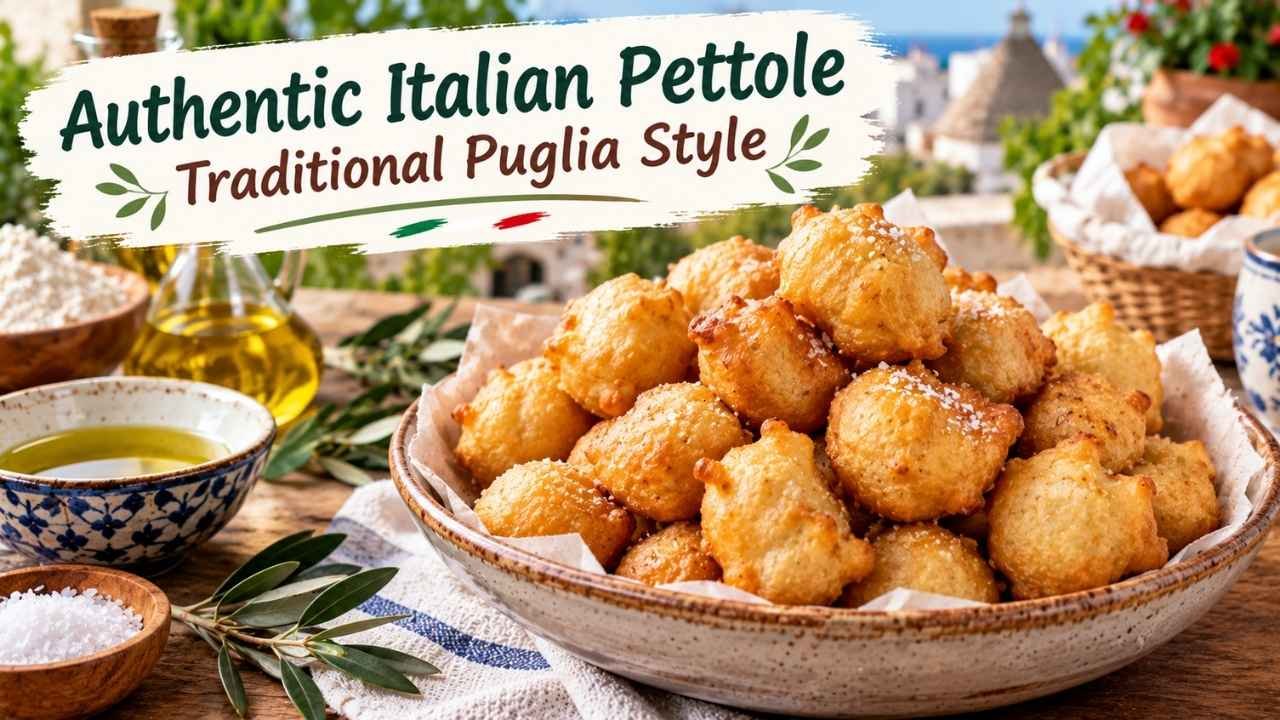
If you’re looking for an authentic Italian Pettole recipe, you’re in for a real taste of Southern Italy. Pettole, also known as Pittule, are soft, fluffy Italian fried dough balls that come from the beautiful region of Puglia (Apulia).
These golden bites have been a cherished part of Italian Christmas food and family celebrations for generations. While they are simple to make with everyday ingredients, their light texture and rich flavor make them truly special. Some families enjoy sweet Pettole drizzled with honey or vincotto, while others prefer savory Pettole filled with olives, anchovies, or herbs.
In this guide, you’ll learn how to make authentic Italian Pettole from scratch with easy step-by-step instructions, expert tips, and traditional serving ideas, so you can enjoy this classic Italian holiday recipe at home with confidence.
Quick Answer
Authentic Italian Pettole are traditional Italian fried dough balls from Puglia (Apulia), famous for their crispy outside and soft, airy center. This classic Pettole recipe is especially popular during Christmas and festive family gatherings. Made with simple pantry ingredients, homemade Pettole can be served sweet with honey or vincotto, or savory with olives, anchovies, or herbs. If you’re wondering how to make authentic Italian Pettole, this easy recipe walks you through every step for delicious, traditional Italian fried dough every time.
What Are Authentic Italian Pettole?
Authentic Italian Pettole are small, golden Italian fried dough balls that have been enjoyed in Puglia, a region in Southern Italy, for many generations. Made from a simple yeast dough of flour, water, salt, and yeast, they become light, fluffy, and slightly crispy when fried. Traditionally, families prepare homemade Pettole during Christmas Eve, St. Martin’s Day, and other holiday celebrations.
Depending on family traditions, they can be served plain, filled with olives or anchovies, or topped with honey for a sweet finish. Their simple ingredients and comforting flavor make them a favorite Italian snack, holiday appetizer, or side dish. If you love classic Italian comfort food, this traditional Pettole recipe is a must-try.
The History and Tradition of Pettole
The story of Authentic Italian Pettole begins in Puglia (Apulia), where this beloved recipe has been passed from one generation to the next. In many towns, especially in Salento, families gather to prepare these soft Italian fried dough balls before Christmas celebrations. Pettole are also closely connected to St. Martin’s Day, when they are shared with family and friends as a symbol of warmth and togetherness.
In some areas, they are known as Pittule, but the recipe remains much the same. Some households enjoy them with honey or vincotto, while others add olives, capers, or anchovies for a savory twist. Their rich tradition makes Pettole more than just food—they are a cherished part of Italian holiday culture.
Why You’ll Love This Authentic Italian Pettole Recipe
There are many reasons to love this authentic Italian Pettole recipe. It uses everyday ingredients, making it easy to prepare whenever you’re craving traditional Italian fried dough. The dough is soft and airy, while the outside turns beautifully crisp after frying. Whether you enjoy sweet Pettole with honey or savory Pettole with olives and herbs, this recipe offers something for everyone.
It’s beginner-friendly, requires no special baking skills, and is perfect for holidays, family dinners, or weekend treats. If you enjoy trying authentic dishes, you may also like Zucchini and Potato Scarpaccia, a delicious Italian vegetable recipe. For a flavorful seasoning, Gomasio Recipe is another great addition to your kitchen. If you’re looking for ingredient swaps in desserts or snacks, don’t miss our guide to Cashews Substitutes.
Ingredients You’ll Need
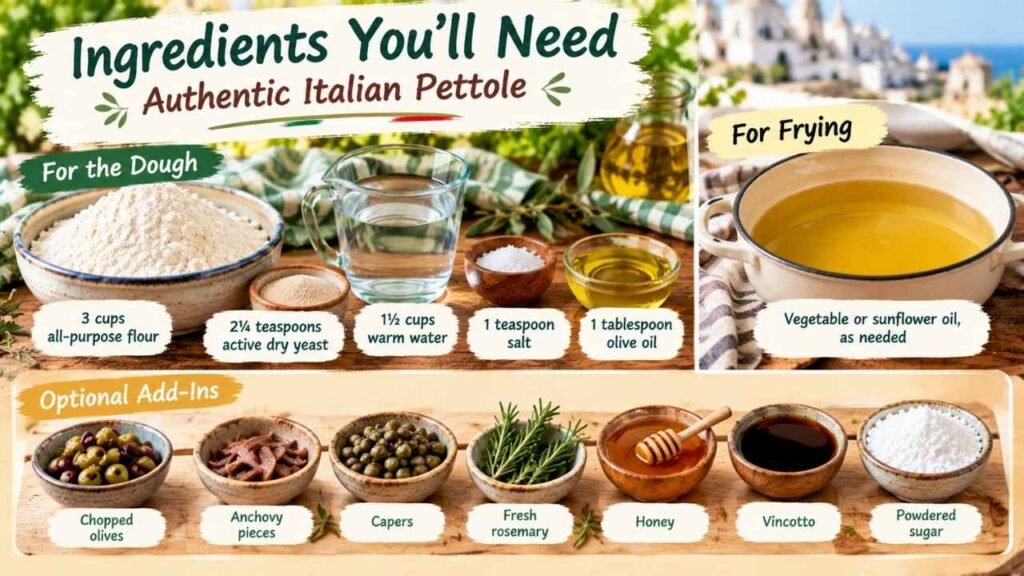
For the Dough:
- 3 cups all-purpose flour
- 2¼ teaspoons active dry yeast
- 1½ cups warm water
- 1 teaspoon salt
- 1 tablespoon olive oil
For Frying:
- Vegetable or sunflower oil, as needed
Optional Add-Ins:
- Chopped olives
- Anchovy pieces
- Capers
- Fresh rosemary
- Honey
- Vincotto
- Powdered sugar
Kitchen Tools You’ll Need
You don’t need expensive equipment to make authentic Italian Pettole, but having the right kitchen tools will make the process much easier. A large mixing bowl gives the yeast dough enough space to rise properly, while a sturdy wooden spoon or spatula helps combine the ingredients. A deep pot or Dutch oven is ideal for frying because it keeps the oil temperature steady.
A kitchen thermometer is highly recommended to maintain the best frying temperature, helping your Italian fried dough cook evenly without becoming greasy. You’ll also need a slotted spoon to remove the Pettole safely and a plate lined with paper towels to drain excess oil before serving. These simple tools help deliver consistently delicious results.
How to Make Authentic Italian Pettole (Step-by-Step)
Step 1: Activate the Yeast
Mix the active dry yeast with warm water and let it sit for 5–10 minutes until it becomes foamy.
Step 2: Make the Dough
Add the flour, salt, and olive oil. Stir until a soft, sticky dough forms.
Step 3: Let the Dough Rise
Cover the bowl with a clean towel and let the dough rise in a warm place until doubled in size.
Step 4: Heat the Oil
Heat the frying oil to 350–375°F (175–190°C).
Step 5: Fry the Pettole
Drop spoonfuls of dough into the hot oil and fry until golden brown on all sides.
Step 6: Drain and Serve
Transfer the Pettole to a paper towel-lined plate. Serve warm with your favorite sweet or savory toppings.
Expert Tips for Perfect Pettole Every Time
The secret to perfect traditional Pettole is paying attention to a few small details. First, don’t worry if the dough feels sticky—that’s exactly what creates a soft and airy center. Let the dough rise in a warm place until it doubles in size, as proper proofing improves both texture and flavor.
Keep the frying oil between 350–375°F so the Italian fried dough cooks evenly without absorbing too much oil. Fry only a few pieces at a time to avoid lowering the oil temperature. Use a slotted spoon to turn them gently for even browning. Finally, drain the crispy Italian fried dough balls on paper towels and serve immediately for the best taste and texture.
Common Mistakes to Avoid
Even an easy Pettole recipe can go wrong if you miss a few important details. One common mistake is adding too much flour, which creates dense instead of fluffy Italian fried dough balls. Another is using water that’s too hot, which can stop the yeast from working. If the dough doesn’t rise enough, your homemade Pettole may turn out heavy.
Frying in oil that’s too cool makes the dough greasy, while oil that’s too hot browns the outside before the inside cooks. Avoid overcrowding the pot, as this lowers the oil temperature and leads to uneven frying. Following these simple tips will help you make authentic Italian Pettole with a light, crispy texture every time.
Sweet vs. Savory Pettole
One of the best things about authentic Italian Pettole is that they can be enjoyed in both sweet and savory ways. Sweet Pettole are often drizzled with honey, vincotto, or sprinkled with powdered sugar, making them a delicious holiday dessert. Savory Pettole are just as popular and may include olives, anchovies, capers, cheese, or fresh herbs mixed into the dough.
Both versions are deeply rooted in Puglia cuisine and appear at family gatherings throughout the holiday season. If you’re making your first batch, try preparing half as sweet and half as savory. This lets everyone enjoy their favorite style while experiencing the rich tradition of this classic Italian Christmas recipe.
Traditional Serving Suggestions
Freshly fried Pettole taste best while they are still warm. For a sweet treat, drizzle them with honey, vincotto, or dust them with powdered sugar. If you enjoy savory flavors, serve them with olives, cured meats, soft cheeses, or roasted vegetables. They also pair well with soups and make an excellent Italian appetizer before a holiday meal.
During Christmas and other celebrations in Southern Italy, families often place Italian fried dough balls in the center of the table for everyone to share. Whether served as a snack, side dish, or dessert, traditional Pettole bring comfort and warmth to every gathering. Their simple flavor makes them easy to pair with many favorite Italian dishes.
Variations You Can Try
Although the classic Pettole recipe is delicious on its own, there are many fun ways to customize it. Add chopped black olives, anchovies, rosemary, or grated Parmesan to create flavorful savory Pettole. If you prefer desserts, drizzle the warm fritters with honey, chocolate spread, or cinnamon sugar for an easy sweet version.
Some families even fill the dough with small pieces of mozzarella for a gooey center. You can also experiment with fresh herbs, garlic, or sun-dried tomatoes to create your own homemade Pettole. These simple changes keep the recipe exciting while staying true to the spirit of traditional Italian fried dough. Every family has its favorite variation, making each batch unique.
How to Store, Freeze, and Reheat Pettole
If you have leftover authentic Italian Pettole, storing them properly helps keep their flavor and texture. Place cooled Italian fried dough balls in an airtight container and refrigerate them for up to three days. For longer storage, freeze them in a freezer-safe bag for up to two months.
When you’re ready to enjoy them again, reheat the homemade Pettole in a preheated oven or air fryer until warm and crispy. Avoid using the microwave if possible, as it can make the dough soft and chewy. Proper storage and reheating help preserve the light interior and crisp exterior, allowing you to enjoy this traditional Italian recipe even after the day it’s made.
Can You Make Pettole Ahead of Time?
Yes, you can prepare authentic Italian Pettole ahead of time, making them a great choice for holiday gatherings. The best method is to prepare the yeast dough several hours in advance or even the night before. After mixing the dough, cover it tightly and store it in the refrigerator.
Before frying, let it sit at room temperature for about 30 to 45 minutes so it can rise properly. This saves time while still giving you fluffy Italian fried dough balls with excellent flavor. You can also fry the Pettole a few hours before serving and warm them in the oven just before guests arrive. This makes entertaining much easier without sacrificing quality.
Ingredient Substitutions
One of the reasons this Pettole recipe is so popular is its flexibility. If you don’t have active dry yeast, you can use instant yeast by reducing the rising time slightly. Bread flour creates a chewier texture, while all-purpose flour keeps the Italian fried dough light and tender. You can replace olive oil in the dough with another mild cooking oil if needed.
For sweet versions, honey can be swapped with maple syrup, while vincotto can be replaced with a balsamic glaze for a similar rich flavor. If you’re making savory Pettole, feel free to use herbs, cheese, or vegetables based on what you have at home. Small substitutions still produce delicious results.
FAQs
What are Pettole?
Pettole are traditional Italian fried dough balls from Puglia, usually served during Christmas and family celebrations.
Are Pettole and Zeppole the same?
No. While both are fried dough treats, Pettole are a traditional Apulian recipe, while Zeppole come from other Italian regions and are often sweeter.
Why is my dough sticky?
A sticky dough is normal and helps create light, fluffy homemade Pettole.
Can I bake Pettole instead of frying?
Yes, but frying gives the authentic crispy outside and soft inside.
Can I freeze Pettole?
Yes. Freeze them after cooling completely and reheat in the oven or air fryer.
What oil is best for frying?
Use vegetable, sunflower, or another neutral oil with a high smoke point.
Can I make sweet and savory Pettole from the same dough?
Absolutely. Prepare one basic dough, then finish each batch with different fillings or toppings.
Conclusion
Authentic Italian Pettole are more than just a delicious recipe—they’re a treasured part of Puglia’s culinary tradition. With their crispy outside, soft center, and endless sweet or savory possibilities, these Italian fried dough balls are perfect for holidays, family gatherings, or any time you want to enjoy homemade comfort food.
By following this traditional Pettole recipe, using quality ingredients, and applying the simple tips shared above, you’ll be able to create light, flavorful Pettole with confidence.
Whether you serve them with honey, vincotto, olives, or herbs, this timeless Italian Christmas recipe is sure to become a favorite that brings family and friends together around the table.