
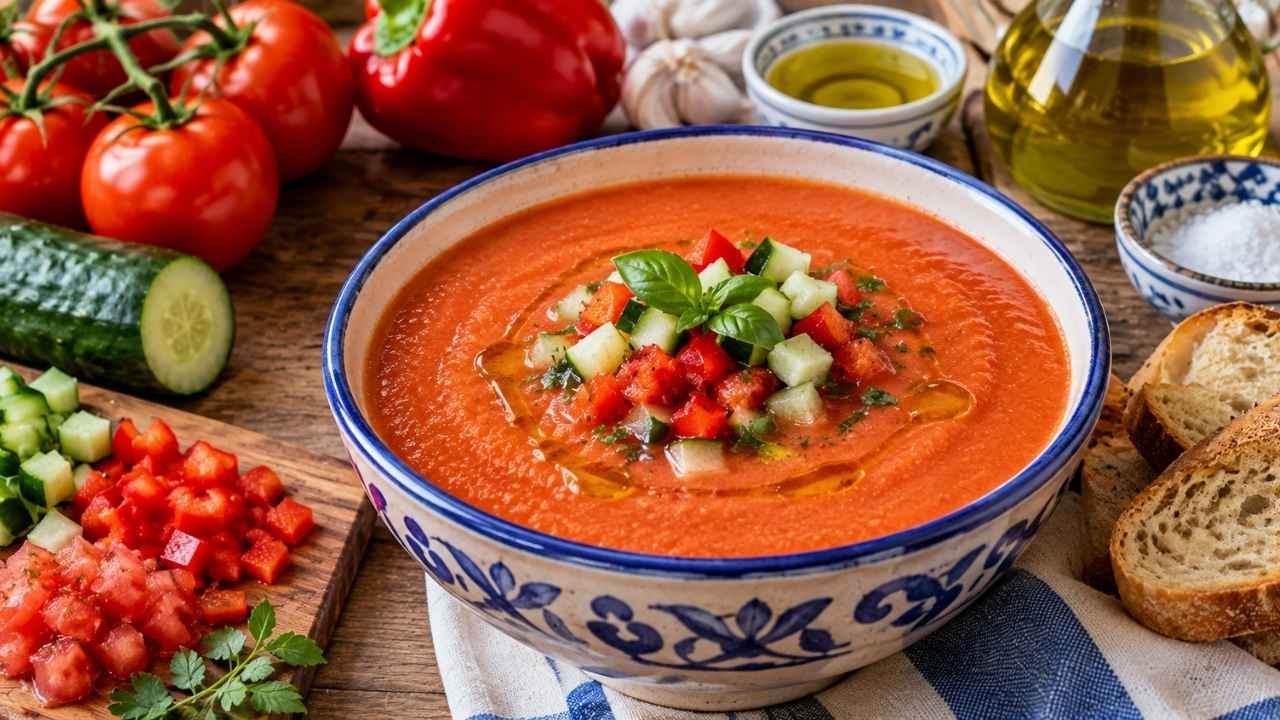
Authentic gazpacho Recipe is one of Spain’s most refreshing and famous dishes. This traditional Andalusian gazpacho is made with ripe tomatoes, cucumber, green bell pepper, garlic, extra virgin olive oil, and sherry vinegar.
Unlike many modern versions, an authentic Spanish gazpacho focuses on fresh ingredients and a smooth, chilled texture. If you have ever wondered how to make authentic gazpacho at home, this guide will walk you through every step.
You will learn which ingredients create the best flavor, why bread is often included, and how long to chill the soup for the perfect taste. Whether you are looking for a classic cold tomato soup or a true traditional gazpacho recipe, this easy homemade version brings the authentic flavor of southern Spain straight to your kitchen.
Quick answer
Authentic gazpacho is a traditional Spanish cold tomato soup from Andalusia. It is made with ripe tomatoes, cucumber, green bell pepper, garlic, extra virgin olive oil, sherry vinegar, and often stale bread. The ingredients are blended until smooth and chilled before serving. A true authentic gazpacho recipe focuses on fresh vegetables, balanced acidity, and a silky texture that is refreshing on hot summer days.
What Makes Gazpacho Truly Authentic?
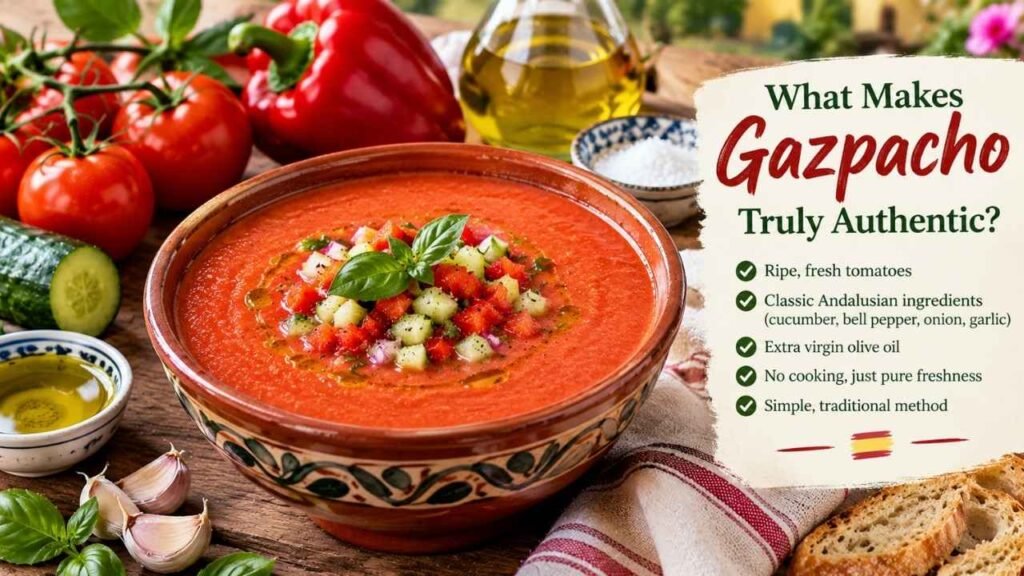
Authentic gazpacho comes from the Andalusia region of Spain. The traditional recipe uses simple ingredients: ripe tomatoes, cucumber, green bell pepper, garlic, extra virgin olive oil, sherry vinegar, and often stale bread. What makes traditional Andalusian gazpacho different from many modern versions is the balance of flavor and texture.
It should be smooth, refreshing, and slightly creamy from the olive oil and bread. A true authentic Spanish gazpacho does not need extra ingredients like cream or fruit.
The focus is on fresh vegetables and good-quality olive oil. If you enjoy classic Mediterranean flavors, dishes such as Pizzette Rosse also highlight how simple ingredients can create rich and authentic taste.
Traditional Andalusian Gazpacho Ingredients
- Ripe tomatoes – the base of the soup and the main source of flavor
- Cucumber – adds freshness and a cooling taste
- Green bell pepper – provides a mild, earthy flavor
- Garlic – gives the gazpacho a gentle kick
- Extra virgin olive oil – creates a smooth and silky texture
- Sherry vinegar – adds the traditional Spanish tang
- Stale bread – helps thicken the soup naturally (optional in some modern versions)
- Salt – enhances all the flavors
- Cold water – used as needed to adjust the consistency
These ingredients are the foundation of a traditional Andalusian gazpacho recipe and create the classic smooth, refreshing flavor that makes authentic Spanish gazpacho famous.
Best Tomatoes for Gazpacho
The best tomatoes for authentic gazpacho from Spain are fully ripe and juicy. Roma tomatoes are a popular choice because they have less water and more flesh, which helps create a richer texture. Vine-ripened tomatoes also work well and add natural sweetness. Avoid hard or pale tomatoes because they can make the soup taste bland and watery.
If your tomatoes are very juicy, you can remove some seeds before blending. This small step helps improve the texture of your cold tomato soup. The quality of the tomatoes has a bigger impact on flavor than any other ingredient, so choose the ripest tomatoes available during the summer season for the best results.
Why Sherry Vinegar Is Traditional
Sherry vinegar gazpacho has a distinctive flavor that comes from one of Spain’s most traditional vinegars. It adds brightness and a gentle acidity that balances the sweetness of ripe tomatoes. Regular white vinegar can make the soup taste sharp, while sherry vinegar provides a smoother and more complex flavor.
This ingredient is one reason why traditional gazpacho ingredients create such a unique result. Start with a small amount, then adjust to your taste. The goal is not to make the soup sour but to enhance the freshness of the vegetables. Combined with extra virgin olive oil, sherry vinegar helps create the classic flavor that defines an authentic gazpacho recipe.
Should Authentic Gazpacho Include Bread?
Many people wonder if authentic gazpacho with bread is the traditional version. In Andalusia, stale bread has been used for generations because it thickens the soup and gives it a smoother texture. Bread also helps the olive oil blend evenly with the vegetables. However, some modern cooks prefer gazpacho without bread for a lighter result.
Both versions can be delicious, but bread is considered part of many classic recipes. If you use bread, soak it in water for a few minutes before blending. This helps it mix smoothly into the soup. For a gluten-free option, simply leave the bread out and reduce the amount of water slightly to keep the texture balanced.
How to Make Authentic Gazpacho
Step 1:Prepare the vegetables
Wash and roughly chop ripe tomatoes, cucumber, green bell pepper, and garlic.
Step 2:Soak the bread
If using stale bread, soak it in a little water for a few minutes until soft.
Step 3:Blend the ingredients
Add the tomatoes, cucumber, green pepper, garlic, and soaked bread to a blender. Blend until smooth.
Step 4:Add olive oil
Slowly pour in extra virgin olive oil while blending to create a creamy, emulsified texture.
Step 5:Season the gazpacho
Add sherry vinegar and salt, then blend again. Taste and adjust if needed.
Step 6:Strain (optional)
For an extra-smooth authentic gazpacho, pass the soup through a fine sieve.
Step 7:Chill thoroughly
Refrigerate the gazpacho for 2–4 hours so the flavors can develop.
Step 8:Serve cold
Pour into bowls or glasses and garnish with diced cucumber, tomato, green pepper, or croutons if desired.
That’s it! These simple steps will help you make a traditional Andalusian gazpacho with the smooth texture and refreshing flavor found in Spain.
How Long Should Gazpacho Chill?
One of the secrets to great authentic gazpacho is proper chilling time. After blending, place the soup in the refrigerator for at least 2 hours. This allows the flavors of the tomatoes, cucumber, garlic, and sherry vinegar to blend together. If you have more time, chilling for 4 to 6 hours often produces an even better flavor.
Gazpacho should be served very cold, especially during hot weather. If you are preparing it for guests, make it earlier in the day so it has enough time to rest. The texture also improves as the olive oil fully combines with the vegetables. Proper chilling is one of the easiest ways to make your traditional Andalusian gazpacho taste more authentic.
Common Gazpacho Mistakes to Avoid
A few simple mistakes can affect the flavor of your cold tomato soup. Using unripe tomatoes is the most common problem because the soup will lack sweetness. Adding too much garlic can overpower the other ingredients. Another mistake is making the soup too watery by adding excess water or using very juicy tomatoes without adjusting the texture.
Some people skip the chilling step, but warm gazpacho does not have the same refreshing taste. Pouring the extra virgin olive oil into the blender too quickly can also prevent proper emulsification.
If you enjoy experimenting with vegetable-based dishes, recipes such as Caramelized Leek Tart With Tofu show how careful ingredient balance can make a big difference in the final flavor.
How to Serve Authentic Spanish Gazpacho
Authentic Spanish gazpacho is traditionally served very cold. In many parts of Spain, it is enjoyed either in a bowl with a spoon or in a glass as a refreshing drink. Popular garnishes include finely diced cucumber, tomato, green bell pepper, and small croutons.
These toppings add texture and make the presentation more attractive. A drizzle of extra virgin olive oil just before serving can enhance the flavor even more.
For a light summer meal, pair gazpacho with crusty bread, olives, or a simple Spanish omelet. The refreshing nature of Spanish gazpacho makes it perfect as a starter, lunch, or cooling afternoon dish during warm weather.
What to Serve With Gazpacho
Because gazpacho is light and refreshing, it pairs well with many Mediterranean dishes. Crusty bread is a classic choice because it complements the smooth texture of the soup. Spanish tortilla, grilled vegetables, olives, and cured ham are also popular accompaniments. If you are planning a summer spread, gazpacho can be served alongside tapas for a complete meal.
Fried plantain dishes, such as the comparison between Tostones and Patacones, can also add a crispy contrast to the chilled soup. The goal is to pair the authentic gazpacho recipe with foods that provide texture and savory flavor without overwhelming the freshness of the tomatoes and vegetables.
Storage and Make-Ahead Tips
Gazpacho storage tips are simple and convenient. Keep the soup in an airtight container in the refrigerator for up to 3 days. The flavor often improves after the first day because the ingredients have more time to blend together. Stir the soup before serving because some separation may occur naturally.
If the gazpacho becomes too thick, add a small splash of cold water and mix well. You can freeze it for longer storage, but the texture may change slightly after thawing. For the best quality, freeze it in small portions and thaw it overnight in the refrigerator. Making homemade Spanish gazpacho ahead of time is an excellent option for busy summer days.
Authentic Gazpacho vs Salmorejo
Although both dishes come from Andalusia, authentic gazpacho and salmorejo are quite different. Gazpacho is thinner, lighter, and more refreshing, making it ideal for hot weather. Salmorejo is much thicker because it contains more bread and olive oil.
It is usually served as a creamy soup with toppings such as hard-boiled eggs and ham. Traditional Andalusian gazpacho focuses on fresh vegetables and a drinkable texture, while salmorejo is richer and more filling.
If you are looking for a light summer soup, gazpacho is usually the better choice. Understanding this difference helps you appreciate why authentic gazpacho from Spain is known for its smooth, cooling, and refreshing character.
FAQs
Can I make gazpacho without bread?
Yes. Gazpacho without bread is lighter and works well for a gluten-free version.
What is the best vinegar for gazpacho?
Sherry vinegar is the traditional choice for an authentic gazpacho recipe.
Can I freeze gazpacho?
Yes, although the texture may be slightly different after thawing.
Why is my gazpacho watery?
This usually happens when the tomatoes contain too much water or extra liquid is added.
Can I make it ahead of time?
Absolutely. Authentic Spanish gazpacho often tastes even better after resting in the refrigerator for several hours or overnight.
Conclusion
Authentic gazpacho is more than just a cold soup—it is a classic taste of Andalusia that celebrates fresh, simple ingredients. By using ripe tomatoes, cucumber, green bell pepper, garlic, extra virgin olive oil, and sherry vinegar, you can create a traditional Andalusian gazpacho that is smooth, refreshing, and full of flavor.
Whether you choose to include bread for a creamier texture or make a lighter version without it, the key is using quality ingredients and chilling the soup well before serving.
Once you learn how to make authentic gazpacho, it becomes an easy summer recipe you can prepare ahead of time and enjoy whenever you need a cool, healthy, and delicious Spanish dish.