
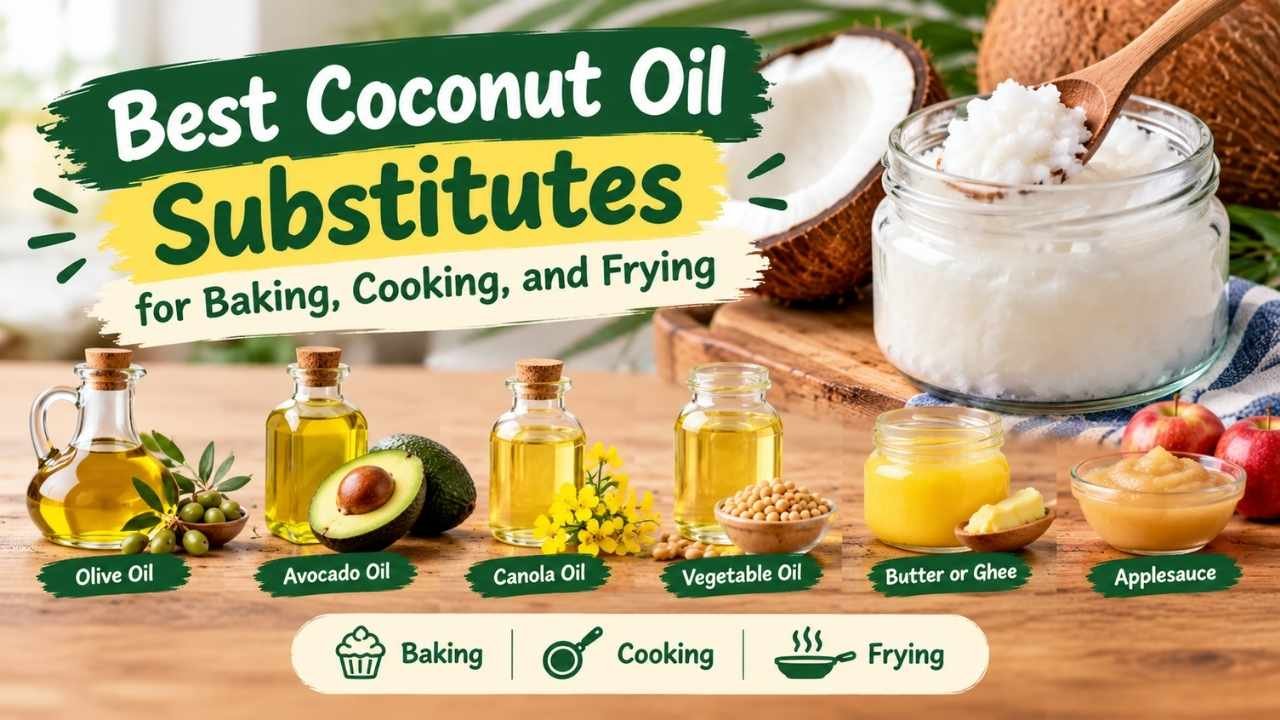
If you are out of coconut oil, don’t worry—there are several coconut oil substitutes that work just as well in many recipes. The best substitute for coconut oil depends on whether you are baking, cooking, or frying.
Options like avocado oil, olive oil, melted butter, and even applesauce can replace coconut oil with little change to the final dish. In most recipes, you can use a 1:1 substitute for coconut oil, making the swap simple and convenient.
This guide will help you choose the right coconut oil replacement based on flavor, texture, smoke point, and dietary needs. Whether you need a healthy coconut oil substitute or a vegan coconut oil substitute, you’ll find the best option for your recipe.
Quick Answer
The best coconut oil substitutes are avocado oil, melted butter, olive oil, canola oil, and applesauce for baking. For most recipes, use a 1:1 substitute for coconut oil. Avocado oil is ideal for high-heat cooking and frying, while butter works best for cookies, cakes, and brownies. If you need a healthy coconut oil substitute, avocado or olive oil are excellent choices.
What Is the Best Substitute for Coconut Oil?
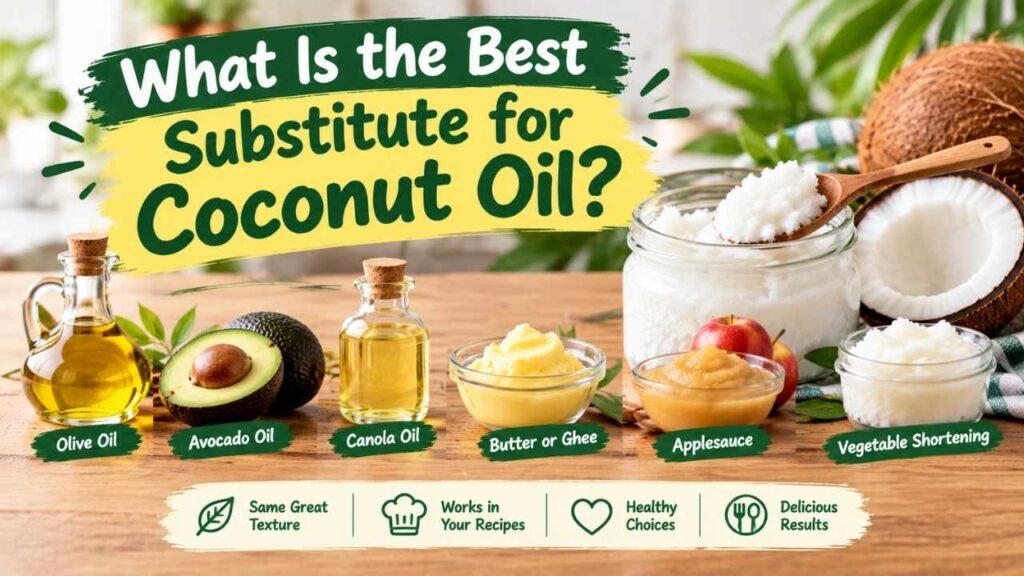
The best substitute for coconut oil is avocado oil because it has a neutral flavor, a high smoke point, and works well in both baking and frying. If you are making cookies, cakes, or brownies, melted butter is often the closest match for texture and richness.
Olive oil is another good coconut oil alternative, especially for savory dishes, though it can add a slightly stronger flavor. For a lighter baking option, applesauce adds moisture while reducing fat.
Many home cooks also use canola oil or sunflower oil as a simple coconut oil replacement. Choosing the right substitute depends on flavor, texture, and whether you are baking, cooking, or frying.
10 Best Coconut Oil Substitutes (Quick Comparison Table)
| Substitute | Best For |
| Avocado oil | Frying, sautéing, baking |
| Melted butter | Cookies, cakes, brownies |
| Olive oil | Savory cooking |
| Canola oil | Everyday cooking |
| Sunflower oil | High-heat cooking |
| Grapeseed oil | Frying and roasting |
| Vegetable oil | General replacement |
| Applesauce | Low-fat baking |
| Greek yogurt | Moist cakes and muffins |
| Vegan butter | Dairy-free baking |
For most recipes, use a 1:1 substitute for coconut oil. If the recipe relies on coconut flavor, choose a mild oil like avocado or grapeseed oil to keep the taste balanced.
Best Coconut Oil Substitutes for Baking
For baking, the best coconut oil substitutes are melted butter, applesauce, Greek yogurt, and avocado oil. Butter gives cookies and brownies a rich flavor and soft texture, making it a great substitute for coconut oil in baking.
Applesauce works well when you want a lighter dessert with less fat, while Greek yogurt adds moisture to cakes and muffins. Avocado oil is useful when you want a healthy coconut oil substitute that will not change the flavor of the recipe.
When using applesauce, reduce other liquids slightly because it adds extra moisture. If you enjoy experimenting with ingredients, you may also find our guide on Substitutes For Fennel helpful for other cooking and baking swaps.
Best Coconut Oil Substitutes for Cooking and Frying
For cooking and frying, choose oils with a high smoke point. Avocado oil is one of the best options because it handles high heat without burning and has a neutral flavor. Sunflower oil, grapeseed oil, and canola oil are also excellent coconut oil substitutes for frying.
These oils work well for sautéing vegetables, roasting, and pan-frying. Olive oil can be used for medium-heat cooking, especially in savory dishes, but it may add a stronger flavor than coconut oil.
If you are preparing Asian-style meals, you might also be interested in our guide on Substitute Dark Soy Sauce for easy ingredient swaps. For a simple 1:1 coconut oil replacement, avocado or canola oil are usually the safest choices.
Best Substitute for High-Heat Cooking
When a recipe requires very high heat, avocado oil is the strongest coconut oil substitute. It has a very high smoke point, which means it stays stable during frying, roasting, and searing.
Grapeseed oil and sunflower oil are also reliable choices for high-temperature cooking. These oils have a mild flavor, so they will not overpower your food. Avoid delicate oils that burn easily when exposed to intense heat.
If you are cooking vegetables, meat, or seafood at high temperatures, avocado oil gives the closest performance to coconut oil. For plant-based meals, our comparison of Mukimame vs Edamame can also help you choose the right protein-rich ingredient for your dishes.
Best Substitute for Air Fryer Recipes
Air fryer recipes need oils that can handle circulating heat while keeping food crisp. Avocado oil, grapeseed oil, and sunflower oil are excellent coconut oil substitutes for air fryer recipes.
They help vegetables, fries, and chicken develop a golden exterior without adding a strong flavor. Use only a small amount because air fryers need less oil than traditional frying. Olive oil can also work for lower-temperature air fryer recipes, especially roasted vegetables.
If you want a healthy coconut oil substitute, avocado oil is usually the best choice because it combines a high smoke point with heart-friendly fats. For most air fryer dishes, a 1:1 replacement ratio works perfectly and keeps the recipe simple.
Healthiest Coconut Oil Substitutes
If you want a healthy coconut oil substitute, choose oils that contain more unsaturated fats and less saturated fat. Avocado oil is one of the healthiest options because it is rich in heart-friendly fats and has a mild flavor.
Olive oil is another excellent choice, especially for salads, sautéing, and light cooking. Canola oil can also be a practical option when you need a neutral-tasting coconut oil replacement.
For baking, applesauce is a lower-fat alternative that adds moisture without extra oil. The healthiest choice depends on your recipe, but avocado and olive oil are usually the best all-around options for everyday cooking and baking.
Vegan and Dairy-Free Coconut Oil Alternatives
For a vegan coconut oil substitute or a dairy-free coconut oil substitute, use avocado oil, olive oil, canola oil, or vegan butter. These options work well in cookies, cakes, muffins, and savory dishes.
Vegan butter is especially useful when a recipe needs the richness of traditional butter. If you want a lighter baked good, applesauce is another plant-based alternative that keeps cakes and muffins moist.
Most vegan recipes allow a 1:1 substitute for coconut oil, making the swap simple. When choosing an alternative, think about whether you need a neutral flavor, a buttery texture, or a lower-fat option.
Which Substitute Has the Most Similar Flavor?
If you want a substitute that tastes closest to coconut oil, refined coconut oil is the nearest match because it has a milder coconut flavor. Among non-coconut options, avocado oil has the most neutral taste and works well in both sweet and savory recipes.
Grapeseed oil and canola oil are also mild enough that most people will not notice a big difference. Olive oil can add a slightly fruity flavor, while melted butter adds richness rather than coconut notes.
For recipes where coconut flavor is important, use refined coconut oil or combine a neutral oil with a small amount of coconut extract for a similar result.
Coconut Oil Replacement Conversion Chart (1:1 Guide)
| Coconut Oil | Substitute |
| 1 cup | 1 cup avocado oil |
| 1 cup | 1 cup melted butter |
| 1 cup | 1 cup canola oil |
| 1 cup | 1 cup sunflower oil |
| 1 cup | 1 cup grapeseed oil |
| 1 cup | ¾ cup applesauce |
| 1 cup | ¾ cup Greek yogurt |
For most oils, use a 1:1 coconut oil replacement ratio. Applesauce and Greek yogurt contain more moisture, so slightly reducing other liquids in the recipe can help maintain the correct texture. This chart makes it easy to choose the right substitute for coconut oil without changing the rest of the recipe.
Common Mistakes When Replacing Coconut Oil
A common mistake is using a strongly flavored oil in a delicate dessert. Olive oil, for example, can change the taste of cookies or cakes. Another mistake is forgetting that applesauce and Greek yogurt add extra moisture.
If you do not reduce other liquids slightly, the baked goods may become too soft. Some cooks also use oils with a low smoke point for high-heat frying, which can cause burning and off-flavors.
When choosing a coconut oil substitute for frying, stick with avocado oil, sunflower oil, or grapeseed oil. Paying attention to flavor, moisture, and heat will give you better results every time.
How to Choose the Right Substitute for Your Recipe
The easiest way to choose a coconut oil substitute is to think about the recipe first. For cookies, brownies, and cakes, use melted butter or vegan butter for a rich texture.
For muffins and quick breads, applesauce or Greek yogurt adds moisture. For frying, roasting, and air fryer recipes, choose avocado oil, sunflower oil, or grapeseed oil because they handle high heat well.
If health is your main concern, avocado or olive oil are usually the best choices. For a vegan or dairy-free coconut oil substitute, stick with plant-based oils or vegan butter.
FAQs
What can I use instead of coconut oil in baking?
Melted butter, applesauce, Greek yogurt, and avocado oil are excellent baking substitutes.
What is the best substitute for coconut oil in cookies?
Melted butter is usually the closest match for flavor and texture.
Can I use olive oil instead of coconut oil?
Yes. Olive oil works well in many recipes, especially savory dishes, though it may add a slightly stronger flavor.
Can I use butter instead of coconut oil?
Yes. Use a 1:1 ratio in most baking recipes.
What is the healthiest substitute for coconut oil?
Avocado oil is often considered the healthiest all-purpose replacement because of its heart-friendly fats and high smoke point.
Conclusion
The best coconut oil substitute depends on how you plan to use it. For baking, melted butter, applesauce, and Greek yogurt work well. For cooking and frying, avocado oil, sunflower oil, and grapeseed oil are excellent choices because they handle high heat.
If you need a healthy coconut oil substitute, avocado or olive oil are strong options, while vegan butter and plant-based oils are ideal for dairy-free or vegan recipes.
Using the 1:1 replacement guide makes switching ingredients easy. With the right coconut oil replacement, you can keep the flavor, texture, and quality of your recipe without any complicated changes.