

How many cups in a pint? The quick answer is 1 pint equals 2 cups in the U.S. customary system. This is one of the most common cooking measurements and baking measurements used in recipes. Whether you are making soup, measuring milk, or preparing dessert, knowing the pint to cups conversion can save time and prevent mistakes in the kitchen.
Many people search for how many cups are in a pint, how many cups are in 1 pint, or convert pints to cups when following a recipe. The good news is that the conversion is simple and easy to remember.
In this guide, you will learn the exact cups in a pint formula, use a helpful conversion chart, and understand the difference between US pint vs UK pint, liquid measurements, and dry measurements so you can measure ingredients with confidence.
Quick Answer
1 pint equals 2 cups in the U.S. customary system. This is the standard pint to cups conversion used in most cooking measurements and baking measurements. If a recipe calls for 1 pint of milk, cream, broth, or another liquid, you can simply measure 2 cups. Remember: Cups = Pints × 2.
Pint to Cups Conversion Formula
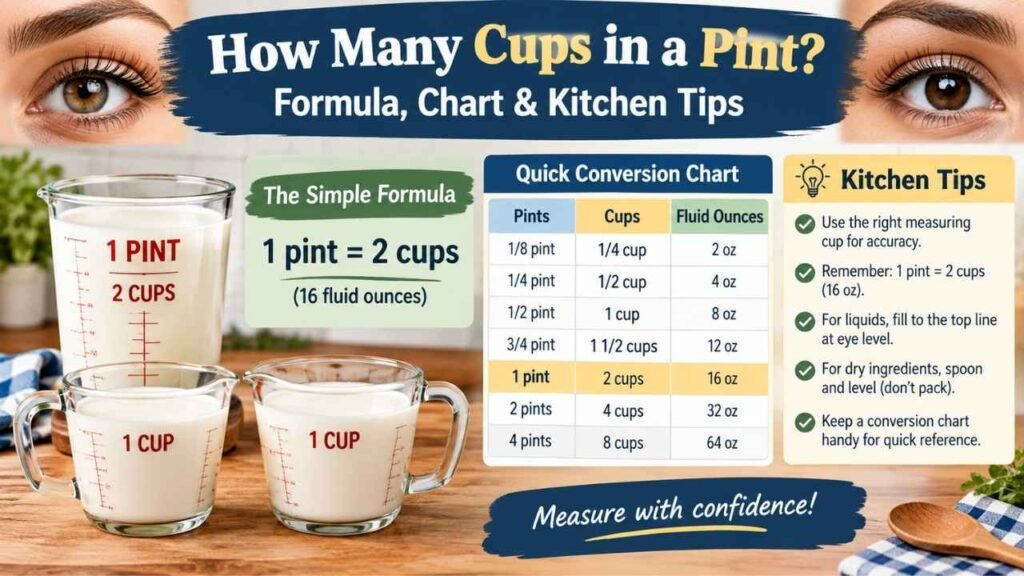
The pint to cups formula is very simple and easy to remember. In the U.S. customary system, 1 pint equals 2 cups. To convert pints into cups, multiply the number of pints by 2. For example, 2 pints = 4 cups and 3 pints = 6 cups. This formula is helpful for cooking measurements, baking measurements, and everyday kitchen conversions.
Many people search for how many cups are in a pint or convert pints to cups when following a recipe. Using the formula Cups = Pints × 2 makes the calculation quick and accurate. If you often work with recipe conversions, learning this basic measurement rule can save time and prevent mistakes while preparing food.
Cups in a Pint Conversion Chart
A conversion chart makes it easier to see common cups in a pint measurements at a glance. Here are the most useful conversions: 1 pint = 2 cups, 2 pints = 4 cups, 3 pints = 6 cups, and 4 pints = 8 cups. This chart is helpful when scaling recipes up or down. Instead of doing the math every time, you can quickly check the correct amount.
These pint measurements are commonly used for milk, cream, broth, and other liquid measurements. Keeping a simple chart nearby can make cooking and baking much easier. If you already use kitchen conversion guides such as 220 C to F or 150 c to f, this pint-to-cup chart works the same way for volume measurements.
How Many Cups in 2, 3, and 4 Pints?
Once you know that 1 pint equals 2 cups, finding larger conversions becomes very easy. 2 pints = 4 cups, 3 pints = 6 cups, and 4 pints = 8 cups. These are some of the most common long-tail keywords people search for, especially when doubling or tripling recipes. For example, a large soup recipe may require 4 pints of broth, which equals 8 cups. A dessert recipe using 3 pints of berries would equal 6 cups.
Understanding these pints to cups conversion examples helps you measure ingredients correctly without using a calculator. This simple rule is useful for both beginner cooks and experienced bakers who need quick and accurate measurement conversions in the kitchen.
How Many Cups in Half a Pint?
A common question is how many cups are in half a pint. Since 1 pint = 2 cups, half of a pint equals 1 cup. This conversion is especially useful when reducing a recipe or measuring smaller amounts of liquid. For example, if a recipe calls for ½ pint of milk, you can simply use 1 cup. Many home cooks find this easier than working with pint measurements directly.
Knowing that ½ pint = 1 cup is a handy kitchen shortcut that saves time and keeps measurements accurate. Whether you are preparing sauces, soups, or baked goods, this quick pint to cup conversion can help you adjust recipes with confidence and avoid common measuring mistakes.
US Pint vs UK Pint — What’s the Difference?
The US pint vs UK pint difference is important because the two measurement systems are not the same. In the United States, 1 pint equals 2 cups. In the United Kingdom, an Imperial pint is larger and equals about 2.4 US cups. This means a British pint contains more liquid than a US pint. Most American recipes use the U.S. customary system, so the standard conversion is 2 cups per pint.
If you are following an international recipe, check which measurement system is being used before converting. Understanding the difference between US and UK pint measurements helps prevent errors when cooking or baking and ensures that your recipe turns out as expected.
Liquid Pint vs Dry Pint Explained
A liquid pint and a dry pint are not always measured the same way. A liquid pint is used for ingredients such as milk, cream, water, or broth, and in the United States it equals 2 cups. A dry pint is used for foods such as berries, tomatoes, or other produce sold by volume. While many recipes still estimate a dry pint as roughly 2 cups, the actual amount can vary depending on the ingredient.
This is why liquid measurements and dry measurements should not always be treated as identical. Understanding the difference between a liquid pint vs dry pint can improve accuracy when measuring ingredients and help your recipes produce more consistent results.
Common Cooking and Baking Conversions
Many recipes use related kitchen conversions along with cups in a pint. Here are a few useful examples: 1 pint = 2 cups, 2 pints = 1 quart, and 4 quarts = 1 gallon. These conversions are helpful when making soups, sauces, desserts, and large batches of food. Knowing how pints, cups, quarts, and gallons connect can make recipe preparation much easier.
Home cooks often keep a small conversion guide nearby for quick reference. If you are already familiar with recipe helpers such as substitute for rice vinegar or temperature conversions like 220 C to F, learning these volume conversions is another useful kitchen skill that saves time and improves measuring accuracy.
How to Convert Cups Back to Pints
Converting cups back to pints is just as easy as converting pints to cups. Since 1 pint equals 2 cups, divide the number of cups by 2 to find the number of pints. For example, 4 cups ÷ 2 = 2 pints and 8 cups ÷ 2 = 4 pints. This conversion is useful when a recipe lists ingredients in cups but you want to measure them in pints.
Many people search for cups to pints conversion when working with large batches of soup, milk, or cream. The simple formula is Pints = Cups ÷ 2. Remembering this rule makes it easy to switch between measurements and keep your cooking measurements accurate without using a calculator.
Why Recipes Use Pints Instead of Cups
Recipes often use pints instead of cups because pints are convenient for measuring larger amounts of ingredients. A container of milk, cream, or berries is frequently sold by the pint, so using pint measurements can make shopping and cooking easier. For example, a recipe that needs 2 cups may simply say 1 pint.
This is especially common in soup, ice cream, and fruit-based recipes. Using pints can also reduce the number of measurements needed when preparing large batches. Understanding pint measurements helps you read recipes more quickly and convert ingredients with confidence. Since 1 pint equals 2 cups, you can easily switch between the two measurements whenever a recipe requires a different unit.
Quick Kitchen Memory Trick for Pint-to-Cup Conversions
A simple memory trick can help you remember the pint to cups conversion instantly: “A pint has two cups.” The word “pint” starts with P, and you can think of it as Pair = 2. This makes it easy to recall that 1 pint = 2 cups without checking a chart. The same trick works for larger conversions.
If you know one pint has two cups, then 2 pints have 4 cups and 4 pints have 8 cups. Many home cooks use small memory tricks like this to speed up kitchen conversions. It is especially useful when measuring ingredients quickly while cooking or baking and helps prevent mistakes during recipe preparation.
Pint-to-Cup Reference Table
A printable pint-to-cup reference table is a useful tool for any kitchen. The most common conversions are ½ pint = 1 cup, 1 pint = 2 cups, 2 pints = 4 cups, 3 pints = 6 cups, and 4 pints = 8 cups. Keeping this table on your refrigerator, inside a recipe binder, or near your measuring cups can save time while cooking.
It is especially helpful when doubling recipes or preparing food for a large group. Instead of doing the math every time, you can quickly check the correct amount. A simple reference chart makes measurement conversion easier and helps ensure that your cooking and baking measurements stay accurate every time you prepare a recipe.
FAQs
Is 1 pint always 2 cups?
Yes. In the U.S. customary system, 1 pint equals 2 cups. This is the standard conversion used in most American recipes.
How many cups are in 2 pints?
2 pints equal 4 cups. Simply multiply the number of pints by 2.
How many pints are in 8 cups?
8 cups equal 4 pints. Divide the number of cups by 2 to convert cups back to pints.
What is the formula to convert pints to cups?
The formula is Cups = Pints × 2. For example, 3 pints × 2 = 6 cups.
Is a UK pint the same as a US pint?
No. A UK (Imperial) pint is larger than a US pint. A UK pint is about 2.4 US cups, while a US pint is exactly 2 US cups.
How many cups are in a pint of milk?
A pint of milk equals 2 cups in the United States. This is one of the most common liquid measurements used in recipes.
Conclusion
Understanding how many cups are in a pint is one of the most useful kitchen skills you can learn. In the U.S. customary system, 1 pint equals 2 cups, making the pint to cups conversion quick and easy. Whether you are measuring milk, broth, cream, or other ingredients, this simple rule helps you follow recipes accurately.
Remember the basic formula: Cups = Pints × 2. That means 2 pints = 4 cups, 3 pints = 6 cups, and 4 pints = 8 cups. It is also helpful to know the difference between US pint vs UK pint and liquid pint vs dry pint when using international recipes or measuring produce.
By keeping a conversion chart handy and remembering that 1 pint = 2 cups, you can make cooking measurements and baking measurements faster, easier, and more accurate every time you step into the kitchen.