
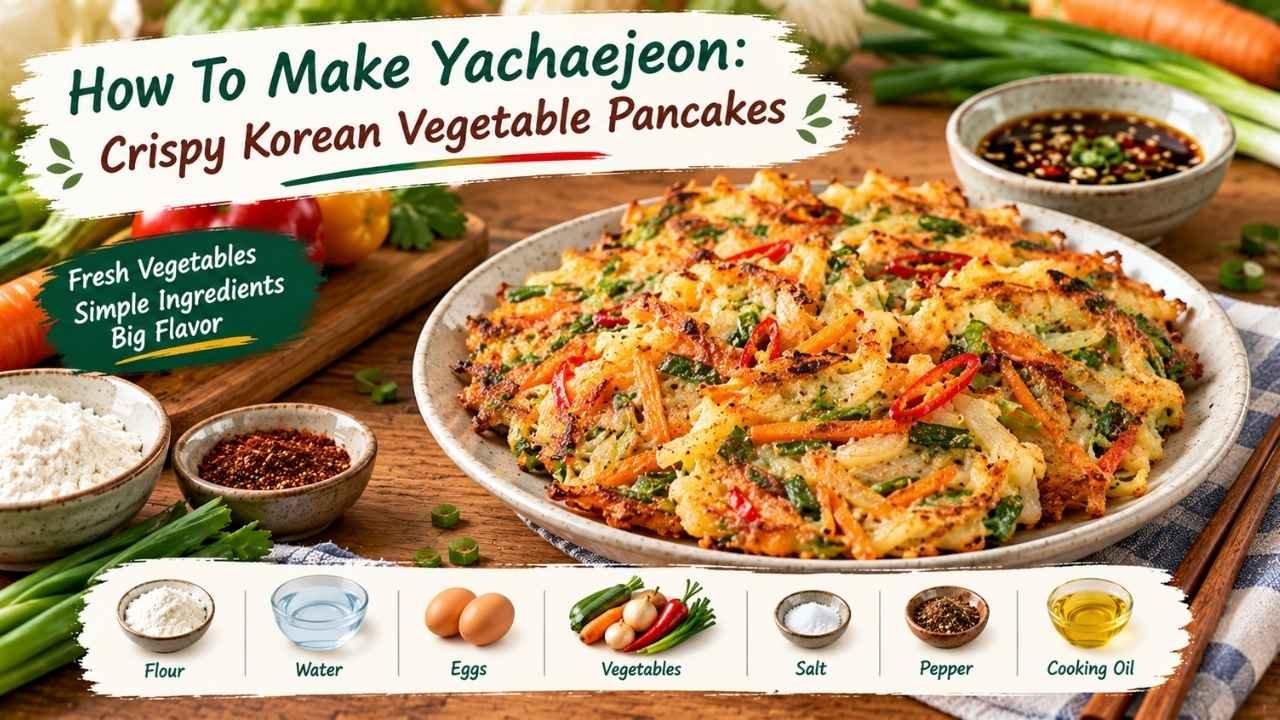
Yachaejeon is a beloved Korean dish made with fresh vegetables mixed into a light batter and pan-fried until golden and crispy. If you want to learn how to make Yachaejeon at home, this easy guide will show you the steps for creating delicious Korean vegetable pancakes with simple ingredients.
This traditional Korean savory pancake is perfect as a snack, side dish, or quick homemade meal. The best Yachaejeon has crispy edges, tender vegetables, and a flavorful bite in every piece.
In this recipe, you will learn how to prepare the batter, choose the best vegetables, and make a crispy Yachaejeon with authentic Korean flavors. Whether you are new to Korean cooking or already love Asian recipes, this beginner-friendly guide will help you create a tasty and satisfying vegetable pancake recipe.
Quick Answer
Yachaejeon is a crispy Korean vegetable pancake made with fresh vegetables, flour, and a simple savory batter. To make Yachaejeon at home, mix sliced vegetables with batter, cook the pancake in a hot pan with oil, and fry until both sides become golden and crunchy. Using cold water, a thin batter, and the right cooking temperature helps create the perfect crispy Korean vegetable pancakes.
What Is Yachaejeon?
Yachaejeon is a popular Korean vegetable pancake made with fresh vegetables, flour batter, and simple seasonings. The word “Yachae” means vegetables, while “Jeon” refers to Korean pan-fried dishes. This traditional Korean savory pancake is loved for its crispy outside, soft vegetable filling, and delicious flavor.
Unlike sweet pancakes, Yachaejeon is a savory dish often served as a snack, side dish, or light meal. Many Korean families enjoy it because it is easy to prepare and works well with different vegetables.
You can customize this vegetable pancake recipe by using seasonal produce you already have at home. Similar to other creative dishes like Leftover Rice Pudding Vegan, Yachaejeon shows how simple ingredients can create a flavorful homemade meal.
Ingredients You’ll Need
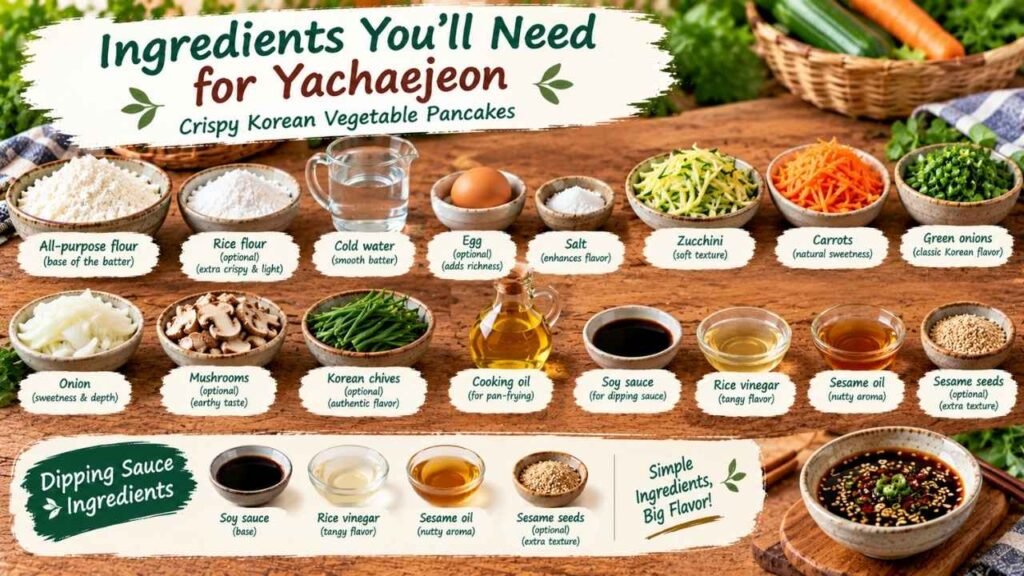
- All-purpose flour – Creates the base of the pancake batter and holds the vegetables together.
- Rice flour (optional) – Helps make the Yachaejeon extra crispy and light.
- Cold water – Creates a smooth batter and improves the crispy texture.
- Egg (optional) – Adds richness and helps bind the ingredients.
- Salt – Enhances the overall flavor of the pancake.
- Zucchini – Adds a soft texture and mild fresh flavor.
- Carrots – Provide natural sweetness and a bright color.
- Green onions – Add a classic Korean flavor and fresh aroma.
- Onion – Brings sweetness and depth to the pancake.
- Mushrooms (optional) – Add a savory, earthy taste.
- Korean chives (optional) – Give an authentic flavor to the Korean vegetable pancake.
- Cooking oil – Used for pan-frying and creating crispy golden edges.
- Soy sauce – Used for making the dipping sauce.
- Rice vinegar – Adds a slightly tangy flavor to the sauce.
- Sesame oil – Provides a nutty aroma and traditional Korean taste.
- Sesame seeds (optional) – Add extra flavor and texture to the dipping sauce.
Best Vegetables for Yachaejeon
Choosing the right vegetables is important for making a tasty Korean vegetable pancake recipe. Traditional Yachaejeon usually includes vegetables that add color, flavor, and a nice texture. Green onions bring a fresh Korean flavor, while carrots add natural sweetness and a bright color.
Zucchini keeps the pancake soft inside, and mushrooms provide a deep savory taste. You can also add cabbage, bell peppers, or Korean chives based on your preference. When preparing vegetables, cut them into thin and similar-sized pieces so they cook properly.
Avoid using vegetables with too much water because excess moisture can make your crispy Yachaejeon become soggy. Fresh and balanced vegetables are the secret to a flavorful pancake that tastes homemade.
How To Make Yachaejeon Step by Step
Step 1: Prepare the Vegetables
Wash and prepare all vegetables before making the batter. Slice zucchini, carrots, onions, green onions, mushrooms, and Korean chives into thin, even pieces. Thin slices help the vegetables cook properly and create a better texture. Remove extra moisture from watery vegetables like zucchini to prevent a soggy Yachaejeon.
Step 2: Make the Pancake Batter
In a large bowl, combine all-purpose flour, rice flour (optional), cold water, and salt. Mix until the batter becomes smooth and slightly thin. The batter should lightly coat the vegetables without becoming too thick. A lighter batter helps create crispy Korean vegetable pancakes.
Step 3: Combine Vegetables and Batter
Add the prepared vegetables to the batter and gently mix until everything is evenly coated. Avoid adding too much batter because the vegetables should remain the main part of the pancake. A good vegetable-to-batter ratio creates a flavorful and crispy Yachaejeon recipe.
Step 4: Heat the Pan
Place a non-stick skillet over medium-high heat and add enough cooking oil to cover the surface lightly. Make sure the pan is hot before adding the mixture. A properly heated pan helps the pancake develop golden, crispy edges.
Step 5: Cook the Yachaejeon
Spread the vegetable mixture into a thin, even layer in the pan. Cook for a few minutes until the bottom becomes golden brown and crispy. Flip carefully and cook the other side until fully cooked and crunchy.
Step 6: Serve and Enjoy
Transfer the cooked Yachaejeon to a plate and cut it into smaller pieces. Serve warm with a Korean dipping sauce made with soy sauce, rice vinegar, sesame oil, and sesame seeds. Enjoy your homemade crispy Korean vegetable pancake as a snack, side dish, or light meal.
How To Make Yachaejeon Extra Crispy
Many people love Yachaejeon because of its crunchy edges and savory flavor. To make your crispy Korean vegetable pancakes even better, follow a few simple tips. First, use cold water when preparing the batter because it helps create a lighter texture. Adding rice flour or a small amount of starch can also improve crispiness.
Always spread the batter into a thin layer and avoid adding too many vegetables at once. Make sure your pan is properly heated before cooking.
Using enough oil helps the pancake develop golden, crispy edges. Avoid covering the pan while cooking because steam can make the pancake soft. These small techniques can help you make restaurant-style Korean vegetable pancakes at home.
Common Mistakes When Making Yachaejeon
Even a simple Yachaejeon recipe can go wrong if you miss a few important steps. One common mistake is adding too much water, which makes the pancake soggy. Another problem is cutting vegetables too thick, causing them to cook unevenly.
Some people also use too much batter, which creates a heavy and soft pancake instead of a crispy one. Cooking on low heat for too long can make the pancake absorb extra oil.
To fix these issues, keep the batter light, slice vegetables thinly, and cook at the right temperature. Learning from these mistakes will help you create a better Korean savory pancake with a crispy texture and delicious homemade taste every time.
Korean Dipping Sauce for Yachaejeon
A simple dipping sauce makes Yachaejeon even more flavorful. Traditional Korean pancakes are often served with a salty and slightly tangy sauce that balances the crispy texture. To make an easy Korean dipping sauce, mix soy sauce, rice vinegar, sesame oil, and sesame seeds in a small bowl. You can also add chili flakes or sliced green onions for extra flavor.
The sauce should taste savory with a small hint of sweetness and spice. Dip each piece of Korean vegetable pancake into the sauce before eating for the best experience. This homemade sauce takes only a few minutes to prepare and adds an authentic touch to your Yachaejeon recipe.
How To Serve Yachaejeon
Yachaejeon is a flexible dish that can be enjoyed in many ways. In Korea, it is commonly served as a side dish, snack, or light meal. Serve it warm with a dipping sauce and enjoy it with rice, soup, or other Korean dishes.
It is also a great choice for gatherings because you can prepare a large batch and cut it into smaller pieces for sharing. For a complete meal, pair your Korean vegetable pancakes with fresh vegetables or a simple salad.
You can enjoy this dish for breakfast, lunch, or dinner because it is filling yet easy to prepare. The combination of crispy texture and fresh vegetables makes it a favorite homemade Korean recipe.
Yachaejeon Variations
One of the best things about Yachaejeon is how easy it is to customize. You can create different versions depending on your taste and dietary needs. For a vegan Yachaejeon, simply skip the egg and use a plant-based batter.
If you need a gluten-free option, replace regular flour with gluten-free flour alternatives. You can also make a spicy version by adding sliced chili peppers or a little Korean chili powder. Mushroom Yachaejeon adds extra savory flavor, while cabbage-based versions create a softer texture.
These variations allow you to enjoy Korean vegetable pancakes with ingredients you already have at home. Experimenting with vegetables makes every Yachaejeon recipe unique and enjoyable.
How To Store and Reheat Yachaejeon
If you have leftover Yachaejeon, proper storage helps maintain its flavor. Allow the pancakes to cool completely before placing them in an airtight container. Store them in the refrigerator for up to three days.
For longer storage, you can freeze Korean vegetable pancakes by placing parchment paper between pieces to prevent sticking. When reheating, avoid using only a microwave because it can make the texture soft. Instead, warm them in a pan with a small amount of oil until they become crispy again.
These methods help restore the original texture and flavor. With proper storage, you can enjoy your homemade Korean savory pancakes later without losing their delicious taste.
FAQs
What does Yachaejeon mean?
Yachaejeon means a Korean pancake made with vegetables. “Yachae” means vegetables, and “Jeon” refers to Korean pan-fried dishes.
Is Yachaejeon vegetarian?
Yes, traditional Yachaejeon is usually vegetarian because it mainly uses vegetables, flour, and seasonings.
Why is my Yachaejeon not crispy?
A soggy pancake usually happens because of too much water, thick batter, or low cooking heat. Use a thin batter and a hot pan for better results.
Can I make Yachaejeon without eggs?
Yes, you can easily make an egg-free version by using flour, water, and vegetables.
Can I freeze Korean vegetable pancakes?
Yes, you can freeze cooked Korean vegetable pancakes and reheat them in a pan to bring back their crisp texture.
Conclusion
Making Yachaejeon at home is a simple and delicious way to enjoy authentic Korean vegetable pancakes with fresh ingredients. This easy recipe shows that you do not need complicated steps to create a flavorful meal.
By using the right batter, fresh vegetables, and proper cooking techniques, you can achieve the perfect balance of crispy edges and tender filling. Whether you enjoy it as a snack, side dish, or light meal, Yachaejeon is a comforting Korean recipe that everyone can try.
Remember to keep the batter light, cook the pancake thin, and serve it warm with a tasty dipping sauce. With these tips, you can confidently make a homemade crispy Yachaejeon recipe that brings Korean flavors straight to your kitchen.