
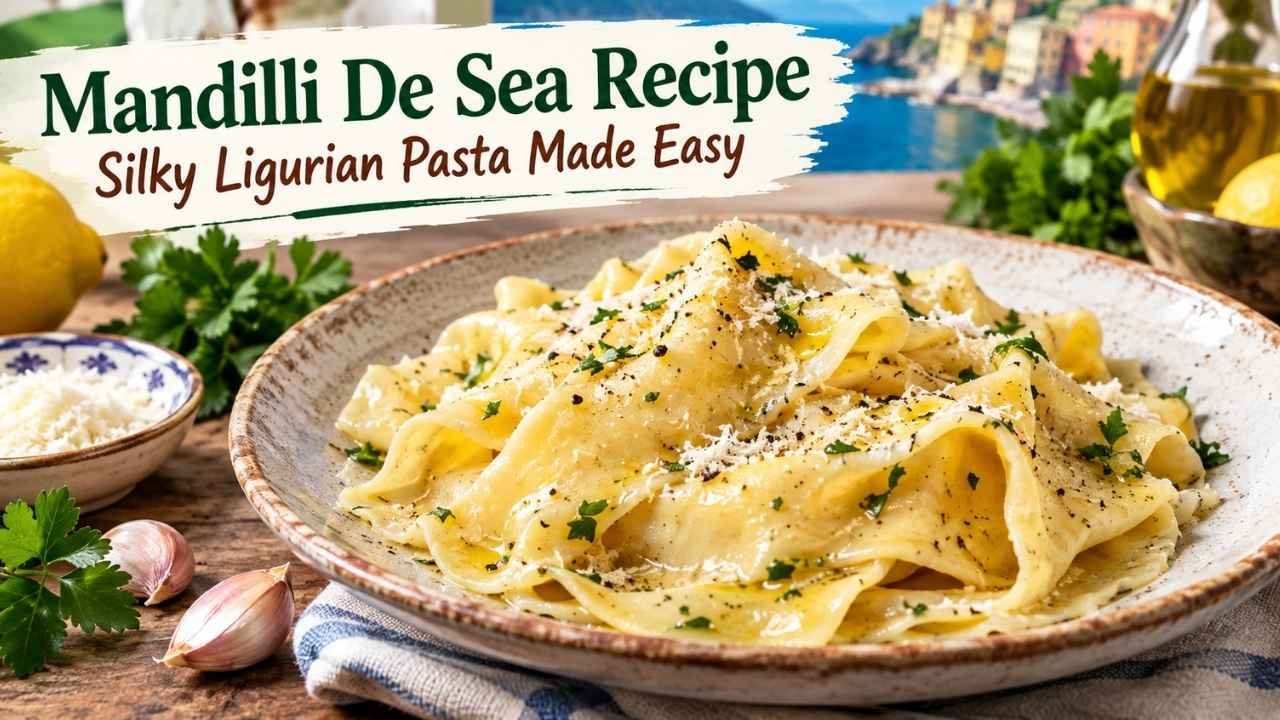
If you love traditional Italian pasta, Mandilli De Sea is a dish worth trying. Also known as Mandilli de Saea, this famous Ligurian pasta is made from large, paper-thin pasta sheets that look like delicate silk handkerchiefs.
The name silk handkerchief pasta comes from the pasta’s soft, silky texture and elegant appearance. In Liguria, it is most often served with pesto alla Genovese, a rich sauce made with basil, pine nuts, cheese, and olive oil. This Italian silk handkerchief pasta is surprisingly simple to make at home using fresh pasta sheets and a few basic ingredients.
In this guide, you will learn what Mandilli De Sea is, how to make an authentic Mandilli de Saea recipe, and which sauces pair best with this traditional Ligurian favorite.
What Is Mandilli De Sea?
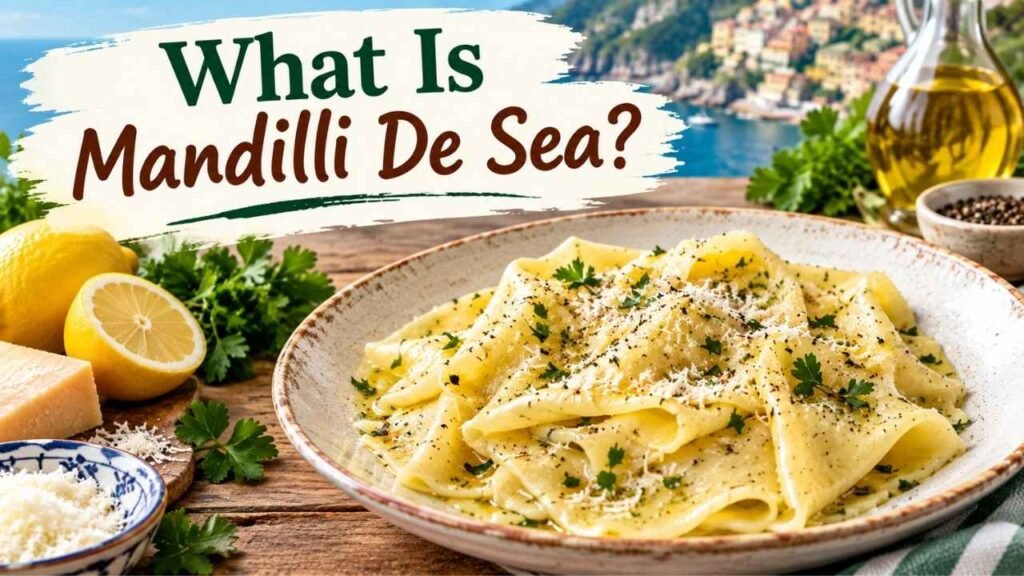
Mandilli De Sea, also spelled Mandilli de Saea, is a traditional Ligurian pasta from Liguria. The pasta is made from large, paper-thin pasta sheets that look like soft pieces of silk. Because of this delicate appearance, it is often called silk handkerchief pasta. Unlike regular noodles, fresh pasta sheets are rolled very thin and cut into wide squares.
They cook quickly and have a smooth, silky texture. The most popular way to serve this Italian silk handkerchief pasta is with pesto alla Genovese, although some cooks also use sugo finto or a light walnut sauce. If you enjoy homemade pasta, this classic Mandilli de Saea recipe is a great introduction to traditional Ligurian cooking.
Why Is It Called Silk Handkerchief Pasta?
The name Mandilli de Saea comes from the Genoese dialect and means “silk handkerchiefs.” When the dough is rolled into large, thin squares, it looks very similar to delicate pieces of silk cloth. This is why many English-speaking cooks refer to it as silk handkerchief pasta.
The pasta is softer and thinner than many other Italian pasta shapes, giving it a silky texture once cooked. Traditional cooks in Genoa often pair it with Genoese pesto, which coats the thin sheets beautifully.
If you are interested in other ingredient guides for Italian cooking, you may also find Substitutes For Fennel helpful when adapting traditional recipes. Understanding the meaning of the name makes this Ligurian pasta even more interesting to prepare and serve.
Ingredients for Authentic Mandilli de Saea
To make authentic Mandilli de Saea (silk handkerchief pasta), you will need:
For the pasta dough
- 2 cups (250 g) all-purpose flour
- 2 large eggs
- ¼ teaspoon salt
- 1–2 tablespoons water (only if the dough feels dry)
For the traditional pesto alla Genovese
- 2 cups fresh basil leaves
- 2 tablespoons pine nuts
- 1 garlic clove
- ¼ cup extra-virgin olive oil
- ¼ cup grated Parmigiano-Reggiano
- 2 tablespoons grated Pecorino Romano
- Salt to taste
Optional serving additions
- Extra grated cheese
- A spoonful of reserved pasta water
- Fresh basil leaves for garnish
These simple ingredients create the delicate fresh pasta sheets that make Mandilli de Saea famous throughout Liguria.
How to Make Mandilli De Sea
Follow these simple steps to make authentic Mandilli De Sea (Mandilli de Saea) at home.
Make the dough
Place the flour on a clean work surface or in a bowl. Add the eggs and salt, then mix until a rough dough forms. If the dough feels too dry, add a small amount of water.
Knead until smooth
Knead the dough for 8–10 minutes until it becomes smooth and elastic. This helps develop the structure needed for paper-thin pasta.
Rest the dough
Wrap the dough in plastic wrap or cover it with a bowl. Let it rest for 30 minutes at room temperature.
Roll the dough thin
Divide the dough into smaller pieces. Using a pasta machine or rolling pin, roll each piece until it is almost translucent, about 0.6–0.9 mm thick.
Cut into large squares
Cut the fresh pasta sheets into large squares or rectangles. These oversized pieces give silk handkerchief pasta its traditional look.
Boil briefly
Bring a large pot of salted water to a boil. Add the pasta and cook for 30–60 seconds until tender.
Toss with sauce
Drain gently and immediately toss the pasta with pesto alla Genovese, walnut sauce, or sugo finto.
Serve immediately
Serve your Mandilli De Sea while warm. The delicate sheets are at their best when freshly cooked and coated with sauce.
Quick Tip
For the most authentic Ligurian pasta, reserve a few tablespoons of pasta water and mix it with the pesto before tossing the pasta. This creates a silky coating that clings perfectly to the thin sheets.
How Thin Should Mandilli De Sea Be?
One of the most important details when making Mandilli De Sea is the thickness of the dough. Traditional Ligurian pasta should be rolled very thin, usually around 0.6–0.9 mm. The sheets should almost be translucent when held up to the light.
If the dough is too thick, the pasta will feel heavy and lose its signature silky texture. If it is too thin, it may tear during cooking. Using a pasta machine on one of the thinnest settings is the easiest way to achieve the right result.
This is what gives silk handkerchief pasta its delicate appearance and soft bite. For cooks who enjoy exploring different foods, comparing ingredients like Mukimame vs Edamame can also be a useful way to understand texture differences in various dishes.
How Long to Cook Mandilli De Sea?
Because Mandilli De Sea is made from paper-thin pasta, it cooks much faster than regular dried pasta. Freshly made Mandilli de Saea usually needs only 30 to 60 seconds in boiling salted water. The pasta is ready when the sheets become tender but still hold their shape.
Overcooking is one of the most common mistakes because the delicate dough can become too soft very quickly. Keep your sauce prepared before the pasta goes into the water so you can toss it immediately after draining.
This helps the Genoese pesto or other sauce coat the fresh pasta sheets evenly. The short cooking time is one reason why this Italian silk handkerchief pasta remains light, silky, and full of flavor.
Traditional Pesto Alla Genovese Pairing
The classic partner for Mandilli De Sea is pesto alla Genovese. This famous sauce from Genoa is made with fresh basil, pine nuts, garlic, Parmigiano-Reggiano, Pecorino cheese, and olive oil.
The smooth pesto clings perfectly to the thin pasta sheets without making them heavy. Many people consider this combination the most authentic way to enjoy silk handkerchief pasta. To serve it traditionally, reserve a small amount of pasta water and mix it with the pesto before tossing the pasta.
The warm water helps create a creamy coating that spreads evenly over every sheet. This simple pairing highlights the delicate texture of Mandilli de Saea and showcases the fresh flavors that make Ligurian pasta so famous around the world.
Other Sauces That Work Well
Although pesto alla Genovese is the traditional choice, several other sauces pair beautifully with Mandilli De Sea. A classic option is walnut sauce (salsa di noci), which adds a rich, nutty flavor without overpowering the delicate pasta.
Sugo finto, a light tomato-based sauce, is another traditional Ligurian favorite. Some cooks also enjoy a simple butter and sage sauce or a ricotta and herb mixture. Because silk handkerchief pasta is so thin, heavy meat sauces can cover its soft texture.
The best sauces are smooth and light, allowing the fresh pasta sheets to remain the star of the dish. Whether you choose walnut sauce, tomato sauce, or pesto, the goal is to enhance the silky character of Mandilli de Saea rather than hide it.
Mandilli De Sea vs Lasagna Sheets
At first glance, Mandilli De Sea may look similar to lasagna sheets, but there are important differences. Mandilli de Saea is rolled much thinner, giving it a softer and more delicate texture.
The sheets are usually served loose and tossed with sauce, while lasagna sheets are layered and baked. Traditional Ligurian pasta is also cut into large squares that resemble silk handkerchiefs, which is where the name silk handkerchief pasta comes from. Lasagna dough is often thicker so it can hold up during baking.
If you substitute lasagna sheets for paper-thin pasta, the final dish will feel heavier and less silky. For the authentic texture and appearance, it is worth taking the extra time to roll fresh pasta sheets as thin as possible.
Common Mistakes When Making Silk Handkerchief Pasta
The most common mistake is rolling the dough too thick. Authentic Mandilli De Sea should be almost translucent. Another mistake is adding too much flour while rolling, which can make the pasta dry and rough.
Overcooking is also a problem because fresh pasta sheets need less than a minute in boiling water. Some cooks use a very heavy sauce that hides the delicate texture of silk handkerchief pasta. It is better to use pesto alla Genovese, sugo finto, or another light sauce.
Finally, avoid letting the rolled sheets sit uncovered for too long, as they can dry out and crack. Paying attention to these small details will help your Mandilli de Saea recipe turn out soft, silky, and closer to the traditional version from Liguria.
How to Store and Freeze Fresh Mandilli De Sea
If you are not cooking Mandilli De Sea immediately, place the fresh pasta sheets in a single layer on a lightly floured tray. Cover them with plastic wrap and refrigerate for up to 24 hours.
For longer storage, freeze the sheets in layers separated by parchment paper. Once frozen, transfer them to an airtight bag or container. The pasta can be kept frozen for about one month.
When ready to cook, do not thaw it first; simply place the frozen sheets directly into boiling water and add a few extra seconds to the cooking time. Proper storage helps preserve the delicate texture of paper-thin pasta and ensures your Italian silk handkerchief pasta remains soft and silky when served with Genoese pesto.
FAQs
What is Mandilli De Sea?
Mandilli De Sea is a traditional Ligurian pasta made from large, paper-thin pasta sheets that resemble silk handkerchiefs.
What does Mandilli de Saea mean?
Mandilli de Saea means “silk handkerchiefs” in the Genoese dialect.
What is the traditional sauce?
The classic pairing is pesto alla Genovese, although walnut sauce and sugo finto are also popular.
How thin should the pasta be?
Authentic Mandilli de Saea is usually rolled to about 0.6–0.9 mm, making it almost translucent.
Can I freeze Mandilli De Sea?
Yes. Freeze the fresh pasta sheets in layers separated by parchment paper and cook them directly from frozen.
Is Mandilli De Sea the same as lasagna sheets?
No. Silk handkerchief pasta is much thinner, softer, and is usually served loose with sauce rather than baked in layers.
Conclusion
Mandilli De Sea is one of the most elegant examples of traditional Ligurian pasta. Its large, paper-thin pasta sheets create a silky texture that is unlike ordinary noodles.
Whether you prepare it with pesto alla Genovese, walnut sauce, or sugo finto, this Italian silk handkerchief pasta highlights the simple ingredients and careful techniques of Ligurian cooking.
By rolling the dough thin, cooking it briefly, and using a light sauce, you can recreate an authentic Mandilli de Saea recipe at home. Once you try this delicate silk handkerchief pasta, it is easy to understand why it has remained a beloved specialty of Liguria for generations.