

Mutabal Recipe is a delicious Middle Eastern eggplant dip known for its smoky flavor, creamy texture, and rich tahini taste. This authentic mutabal recipe brings the traditional flavors of Levantine cuisine straight to your kitchen with simple ingredients and easy steps.
Made with roasted eggplant, garlic, lemon juice, tahini, and olive oil, this homemade dip is perfect for serving with pita bread, grilled foods, or as part of a mezze platter. Unlike many store-bought dips, homemade mutabal allows you to control the smoky flavor and freshness.
Whether you are trying this Lebanese mutabal recipe for the first time or looking for an easy appetizer, this guide will help you make a creamy and flavorful eggplant dip at home.
Quick Answer
Mutabal is a creamy Middle Eastern eggplant dip made with roasted eggplant, tahini, garlic, lemon juice, and olive oil. To make an authentic mutabal recipe, roast the eggplant until smoky, mash it, then mix it with the remaining ingredients until smooth and flavorful. This easy homemade mutabal eggplant dip is traditionally served with pita bread, fresh vegetables, or as part of a mezze platter.
What Is Mutabal?
Mutabal is a traditional Middle Eastern eggplant dip that comes from the rich food culture of the Levant region. It is a creamy and smoky dish made mainly with roasted eggplant, tahini, garlic, lemon juice, and olive oil.
This flavorful dip is a popular part of a mezze platter, where it is served alongside bread, salads, and other small dishes. The secret behind a great authentic mutabal recipe is the roasted eggplant, which gives the dip its deep smoky taste and smooth texture.
While many people compare mutabal with baba ganoush, they are slightly different because mutabal usually contains more tahini, creating a richer flavor. This easy homemade dip is perfect for appetizers, snacks, or family meals.
Mutabal vs Baba Ganoush: What’s the Difference?
Many people think mutabal and baba ganoush are the same, but there are some important differences between these two popular Middle Eastern eggplant dips. Both recipes use roasted eggplant as the main ingredient, but the preparation and flavors are different.
A traditional mutabal recipe usually includes tahini paste, garlic, lemon juice, and olive oil, giving it a creamy and nutty taste. Baba ganoush often focuses more on the smoky eggplant flavor and may include vegetables, herbs, or spices.
Mutabal has a smoother texture, while baba ganoush can be slightly chunky. Understanding the difference between mutabal and baba ganoush helps you enjoy both dishes and choose the right dip for your meal.
Ingredients You’ll Need for Mutabal
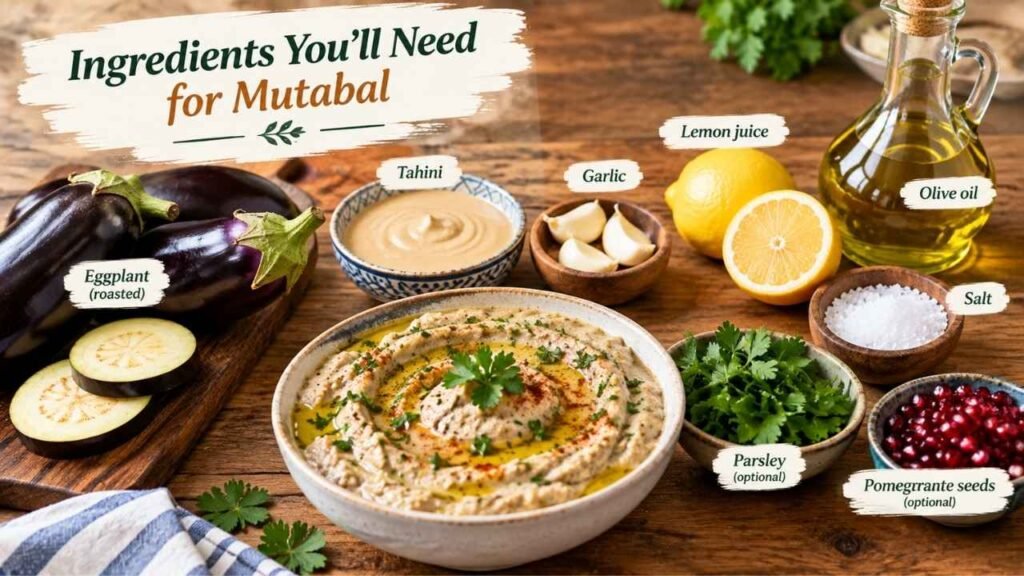
Making a delicious mutabal eggplant dip requires simple and fresh ingredients. The quality of each ingredient helps create the perfect balance of smoky, creamy, and fresh flavors. You will need roasted eggplant, tahini, garlic cloves, fresh lemon juice, olive oil, salt, and optional toppings like parsley or pomegranate seeds.
- Eggplant: Choose fresh, firm eggplants for the best smoky flavor.
- Tahini: Adds a rich, nutty taste and creamy texture.
- Garlic: Gives the dip a warm and bold flavor.
- Lemon juice: Adds freshness and balances the richness.
- Olive oil: Makes the dip smoother and more flavorful.
This simple ingredient list makes mutabal an easy and healthy homemade appetizer. You can also enjoy it alongside dishes like Smashed Peas On Toast or a fresh Fennel And Orange Salad Recipe for a complete meal spread.
How to Make Mutabal Recipe (Step-by-Step)
Roast the Eggplants: Wash the eggplants and roast them over an open flame, grill, or in the oven until the skin becomes charred and the inside turns soft. This step gives the mutabal recipe its signature smoky flavor.
Peel and Drain the Eggplant: Allow the roasted eggplants to cool, then remove the skin. Place the flesh in a strainer for a few minutes to remove extra liquid and prevent a watery dip.
Mash the Eggplant: Add the roasted eggplant to a bowl and mash it with a fork until it reaches a smooth but slightly textured consistency.
Add Tahini and Seasonings: Mix in tahini paste, crushed garlic, fresh lemon juice, olive oil, and salt. Stir everything together until the ingredients are well combined.
Adjust the Flavor: Taste the homemade mutabal and adjust the seasoning if needed. Add more lemon juice for freshness or more tahini for a richer flavor.
Garnish and Serve: Transfer the Middle Eastern eggplant dip to a serving bowl. Drizzle with olive oil and top with parsley, paprika, or pomegranate seeds. Serve with warm pita bread or fresh vegetables.
Tips for Making Creamy and Smoky Mutabal
Creating the perfect creamy mutabal depends on a few simple cooking tips. The most important step is roasting the eggplant properly because it gives the dip its signature smoky taste. For the best smoky eggplant dip, roast the eggplant over an open flame, grill, or in the oven until the skin is charred and the inside is soft.
Always drain extra liquid from the roasted eggplant to keep the texture thick and smooth. Use fresh lemon juice and good-quality tahini paste to improve the flavor. If the dip feels too thick, add a small amount of olive oil to create a smoother texture. Letting the mutabal rest for a few minutes before serving helps all the flavors blend together.
Common Mistakes When Making Mutabal
Even a simple mutabal recipe can go wrong if a few important steps are missed. One common mistake is using undercooked eggplant, which can make the dip taste bitter and less flavorful. Always roast the eggplant until it becomes soft and smoky for the best results.
Another mistake is adding too much tahini, which can overpower the natural eggplant flavor. The balance between tahini, garlic, and lemon juice is what creates the perfect taste.
Some people also skip draining the roasted eggplant, which can make the dip watery instead of creamy. Avoid adding too much garlic at once because its flavor becomes stronger after resting. By following these simple tips, you can prepare a smooth and delicious homemade mutabal every time.
Variations of Traditional Mutabal
While the classic authentic mutabal recipe uses roasted eggplant, tahini, garlic, and lemon, there are many ways to adjust it based on your taste. A vegan mutabal recipe is naturally easy because the traditional version already uses plant-based ingredients.
You can also make a lighter version by reducing olive oil or adding extra herbs for freshness. Some people prefer mutabal without yogurt for a stronger eggplant and tahini flavor, while others add yogurt for extra creaminess.
For a spicy twist, mix in chili flakes or fresh peppers. You can also create a richer version by adding more roasted eggplant or extra tahini. These variations make this Middle Eastern eggplant dip suitable for different diets and preferences.
What to Serve With Mutabal
Mutabal is a versatile dip that works well with many dishes and is often served as part of a traditional mezze platter. The most common pairing is warm pita bread, which is perfect for scooping up the creamy dip. You can also serve this roasted eggplant dip with flatbreads, crackers, or fresh vegetables like cucumbers and carrots. It pairs beautifully with grilled meats, falafel, and other Middle Eastern dishes.
For a simple appetizer table, serve mutabal with olives, salads, and hummus. The smoky flavor and creamy texture make it a favorite choice for gatherings and family meals. Whether served as a snack or side dish, this homemade mutabal adds a delicious Mediterranean touch to any spread.
How to Store Homemade Mutabal
Proper storage helps keep your homemade mutabal fresh and flavorful for longer. After preparing the dip, place it in an airtight container and store it in the refrigerator. Freshly made mutabal eggplant dip usually stays good for about three to five days when stored properly. Before serving again, allow it to sit at room temperature for a few minutes and stir well to bring back its creamy texture.
You can also add a small drizzle of olive oil on top before storing to help maintain freshness. While freezing is possible, it may slightly change the texture because eggplant contains water. For the best taste and consistency, it is recommended to enjoy your authentic mutabal recipe fresh or within a few days.
Mutabal Nutrition Information
Mutabal is not only delicious but can also be a nutritious addition to your meals. This Middle Eastern eggplant dip contains healthy ingredients that provide important nutrients. Eggplant is a good source of fiber and contains plant compounds that support overall health.
Tahini adds healthy fats, minerals, and a rich flavor to the recipe. Since traditional mutabal uses simple plant-based ingredients, it is naturally vegetarian and can easily be enjoyed as a vegan eggplant dip.
The exact calories depend on the amount of tahini and olive oil used. Adding fresh vegetables or serving it with whole-grain bread can make it part of a balanced meal. This makes mutabal a flavorful choice for those looking for a healthy and satisfying appetizer.
FAQs
Is mutabal the same as baba ganoush?
No, mutabal and baba ganoush are different. Both use roasted eggplant, but mutabal usually contains more tahini, creating a creamier texture and richer flavor.
Is mutabal vegan?
Yes, a traditional mutabal recipe is naturally vegan because it uses eggplant, tahini, garlic, lemon juice, and olive oil.
Can I make mutabal without tahini?
Yes, you can make mutabal without tahini, but the flavor will be different. Tahini gives the dip its classic nutty taste and creamy texture.
How long does homemade mutabal last?
Stored in an airtight container, homemade mutabal can usually stay fresh in the refrigerator for three to five days.
Why is my mutabal bitter?
Bitterness usually comes from poor-quality eggplant or undercooked roasting. Properly roasting and draining the eggplant helps improve the flavor.
Conclusion
This Mutabal Recipe is a simple way to enjoy an authentic Middle Eastern eggplant dip with rich smoky flavors and a creamy texture. With roasted eggplant, tahini, garlic, lemon juice, and olive oil, you can create a delicious homemade dip that feels both traditional and comforting.
Whether you serve it with pita bread, fresh vegetables, or as part of a mezze platter, mutabal is a dish that brings people together.
By following the right roasting method and balancing the ingredients, you can easily prepare a flavorful Lebanese mutabal recipe at home. Try this easy recipe and enjoy the classic taste of Levantine cuisine in your own kitchen.