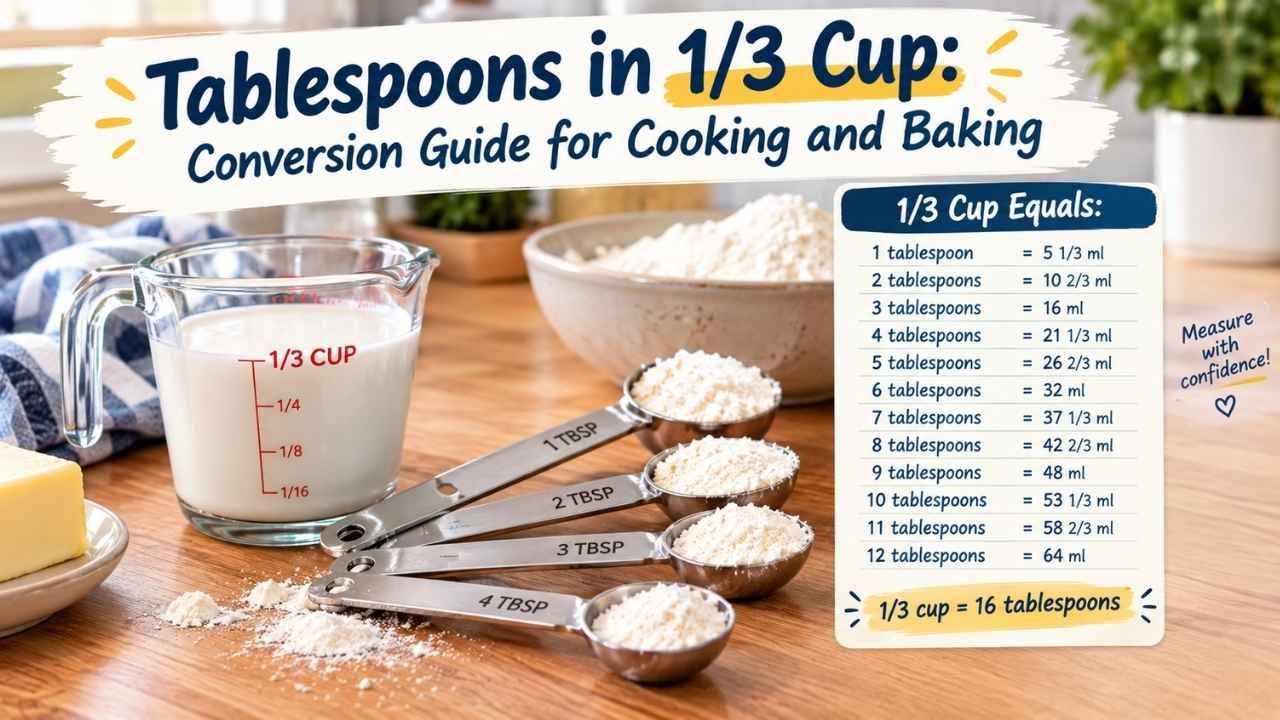
If you’ve ever started making a recipe and realized you don’t have a 1/3-cup measuring cup, you’re not alone. Knowing how many tablespoons in 1/3 cup can save time and help you measure ingredients with confidence. In U.S. cooking measurements, 1/3 cup equals 5⅓ tablespoons, or 5 tablespoons plus 1 teaspoon.
This simple cup to tablespoon conversion is useful for both cooking and baking, whether you’re measuring dry ingredients like flour or liquid ingredients like milk or oil. Understanding kitchen measurements also makes it easier to scale recipes, substitute measuring tools, and avoid mistakes that can affect the final dish.
In this guide, you’ll learn the exact 1/3 cup to tablespoons conversion, see easy recipe conversion charts, discover practical measuring tips, and find answers to common questions so you can prepare recipes with greater accuracy every time.
Quick Answer
There are 5⅓ tablespoons in 1/3 cup using U.S. standard cooking measurements. This is the same as 5 tablespoons plus 1 teaspoon, making it easy to measure if you don’t have a 1/3-cup measuring cup. This 1/3 cup to tablespoons conversion works for both dry ingredients and liquid ingredients because it measures volume, not weight.
Why Does 1/3 Cup Equal 5⅓ Tablespoons?
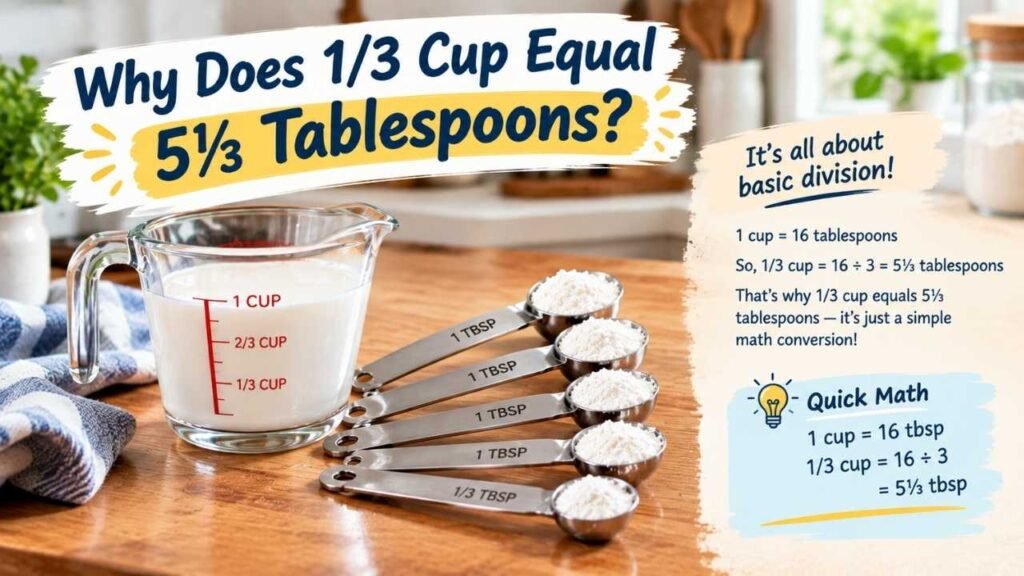
The answer comes from a simple cup to tablespoon conversion. In U.S. standard cooking measurements, 1 cup contains 16 tablespoons. To find how many tablespoons are in 1/3 cup, divide 16 by 3.
The result is 5⅓ tablespoons, which is also the same as 5 tablespoons plus 1 teaspoon because 1 tablespoon equals 3 teaspoons. This conversion formula is used in many recipe conversions, making it helpful for both cooking and baking.
Whether you’re measuring dry ingredients like sugar and flour or liquid ingredients such as milk and oil, the volume stays the same. Learning this easy 1/3 cup to tablespoons calculation helps you measure accurately, scale recipes, and prepare food with confidence every time.
Cups to Tablespoons Conversion Chart
A cups to tablespoons conversion chart is a handy kitchen tool that helps you measure ingredients quickly without doing math every time. Whether you’re following a new recipe or doubling one, knowing these cooking measurements makes preparation easier. Here are some common cup to tablespoon conversions used in everyday baking measurements and recipe conversions:
- 1/8 cup = 2 tablespoons
- 1/4 cup = 4 tablespoons
- 1/3 cup = 5⅓ tablespoons
- 1/2 cup = 8 tablespoons
- 2/3 cup = 10⅔ tablespoons
- 3/4 cup = 12 tablespoons
- 1 cup = 16 tablespoons
Keeping these kitchen measurements in mind can save time, reduce measuring mistakes, and help you prepare recipes with better accuracy.
Tablespoons to Cups Conversion Chart
Sometimes a recipe lists ingredients in tablespoons instead of cups. A tablespoons to cups conversion chart makes it easy to switch between the two without guessing. These kitchen conversion values are useful for small recipes, ingredient substitutions, and everyday cooking measurements.
- 1 tablespoon = 1/16 cup
- 2 tablespoons = 1/8 cup
- 4 tablespoons = 1/4 cup
- 5⅓ tablespoons = 1/3 cup
- 8 tablespoons = 1/2 cup
- 12 tablespoons = 3/4 cup
- 16 tablespoons = 1 cup
Learning these simple recipe measurement conversions helps you measure ingredients more accurately. Whether you’re baking cookies or cooking dinner, understanding cups to tablespoons and tablespoons to cups makes every recipe easier to follow.
1/3 Cup in Other Kitchen Measurements
Knowing 1/3 cup in other kitchen measurements can make cooking and baking much easier, especially when a recipe uses different units. In U.S. standard measurements, 1/3 cup equals 5⅓ tablespoons, 16 teaspoons, about 79 milliliters (mL), and approximately 2.67 fluid ounces.
These recipe conversions are helpful when using measuring spoons instead of cups or when following recipes from different countries. Keep in mind that cups and tablespoons measure volume, while grams measure weight, so the gram value changes depending on the ingredient.
For example, 1/3 cup of flour weighs differently than 1/3 cup of sugar. Learning these kitchen measurements helps you make accurate cooking conversions and prepare recipes with better results every time.
How to Measure 1/3 Cup Without a Measuring Cup
If you don’t have a 1/3-cup measuring cup, there are several easy ways to measure the right amount. The simplest method is to use 5 tablespoons plus 1 teaspoon, which equals 1/3 cup in U.S. cooking measurements. You can also combine other measuring cups. For example, use 1/4 cup plus 1 tablespoon and 1 teaspoon to get very close to 1/3 cup.
These simple recipe measurement tricks are useful when baking or cooking and help you avoid guessing. Always use level measuring spoons for dry ingredients like flour and sugar, and fill measuring cups to the correct line for liquid ingredients. Accurate kitchen measurements lead to better flavor, texture, and consistent results.
Dry vs. Liquid Measurements: Does the Conversion Change?
Many people wonder if the 1/3 cup to tablespoons conversion changes for dry ingredients and liquid ingredients. The answer is no. A 1/3 cup always equals 5⅓ tablespoons because both cups and tablespoons measure volume, not weight.
Whether you’re measuring water, milk, oil, flour, or sugar, the volume conversion stays the same. However, the weight of each ingredient is different. For example, 1/3 cup of flour weighs much less than 1/3 cup of honey.
That’s why recipes sometimes list ingredients in grams for better accuracy. For everyday cooking measurements and baking measurements, using the correct measuring tools and following the standard cup to tablespoon conversion will help you achieve reliable results.
U.S., Metric, and Australian Tablespoons Compared
Not every country uses the same tablespoon measurement, so it is helpful to know the difference when following international recipes. In the United States, 1 tablespoon equals 15 milliliters (mL), and 1/3 cup equals 5⅓ tablespoons.
Most Canadian recipes also follow this standard. In Australia, however, 1 tablespoon equals 20 milliliters, which means conversions can be different. Many recipes from the United Kingdom use metric measurements, so they may list ingredients in milliliters or grams instead of cups.
Before making a recipe from another country, check which measurement system it uses. Understanding these kitchen measurements helps you avoid mistakes and ensures your cooking and baking turn out just as intended.
Common Mistakes When Measuring Ingredients
Even a small measuring mistake can change the outcome of a recipe. One common error is using a regular spoon instead of a measuring tablespoon, which may not hold the correct amount.
Another mistake is packing flour tightly into the measuring cup instead of spooning it in and leveling it. When measuring liquid ingredients, always use a liquid measuring cup and read it at eye level for better accuracy.
Some people also round 5⅓ tablespoons to 5 tablespoons, which can affect recipes that require precise baking measurements. Using the correct measuring cups and measuring spoons, along with accurate recipe conversions, helps improve flavor, texture, and consistency in every dish.
Tips for Accurate Baking and Cooking Measurements
Accurate cooking measurements are one of the keys to successful recipes. Always use dry measuring cups for flour, sugar, and other dry ingredients, and use a liquid measuring cup for water, milk, or oil.
Level off dry ingredients with a straight edge instead of shaking the cup. For small amounts, use measuring spoons instead of regular kitchen spoons. If a recipe asks for 1/3 cup, remember that it equals 5⅓ tablespoons or 5 tablespoons plus 1 teaspoon.
Keeping a kitchen conversion chart nearby can also save time while cooking. Following these simple habits improves recipe accuracy, reduces waste, and helps you achieve consistent baking and cooking results every time.
FAQs
Is 1/3 cup equal to 5 tablespoons?
No. 1/3 cup equals 5⅓ tablespoons, which is the same as 5 tablespoons plus 1 teaspoon in U.S. standard measurements.
Can I use tablespoons instead of a measuring cup?
Yes. If you don’t have a 1/3-cup measuring cup, simply measure 5 tablespoons plus 1 teaspoon.
Does the conversion change for dry or liquid ingredients?
No. The cup to tablespoon conversion stays the same because both measure volume. Only the weight of ingredients changes.
What is 1/3 cup in milliliters?
1/3 cup is about 79 milliliters (mL) in the U.S. measurement system.
Quick Kitchen Conversion Cheat Sheet
Keeping a few common kitchen conversions in mind can make cooking much faster. Here are some of the most useful ones:
- 1 tablespoon = 3 teaspoons
- 2 tablespoons = 1/8 cup
- 4 tablespoons = 1/4 cup
- 5⅓ tablespoons = 1/3 cup
- 8 tablespoons = 1/2 cup
- 12 tablespoons = 3/4 cup
- 16 tablespoons = 1 cup
- 1 cup = 240 mL (approximately)
You can save this cooking conversion chart or print it for quick reference. It helps with recipe conversions, ingredient substitutions, and measuring ingredients accurately without stopping to calculate every time.
Printable Cooking Measurement Reference
A printable cooking measurement reference is a useful tool to keep in your kitchen. It gives you quick access to common cups to tablespoons, tablespoons to cups, teaspoons, and milliliter conversions whenever you need them.
Whether you bake every weekend or cook simple family meals, having a conversion guide nearby can save time and reduce measuring mistakes. You can print a small chart and place it inside a kitchen cabinet, on the refrigerator, or in your recipe binder for easy access.
This simple reference is especially helpful when doubling recipes, halving ingredients, or working without a complete set of measuring cups. A handy kitchen conversion chart makes everyday cooking easier and more accurate.
Conclusion
Knowing how many tablespoons are in 1/3 cup is a simple skill that makes cooking and baking much easier. Remember that 1/3 cup equals 5⅓ tablespoons, or 5 tablespoons plus 1 teaspoon, using U.S. standard cooking measurements.
This easy cup to tablespoon conversion helps when you don’t have the right measuring cup or when you need to adjust a recipe. By understanding kitchen measurements, using the correct measuring tools, and keeping a conversion chart nearby, you can prepare recipes with confidence and accuracy.
Save this guide as a quick reference whenever you need reliable recipe conversions, and you’ll spend less time calculating and more time enjoying delicious homemade meals.