
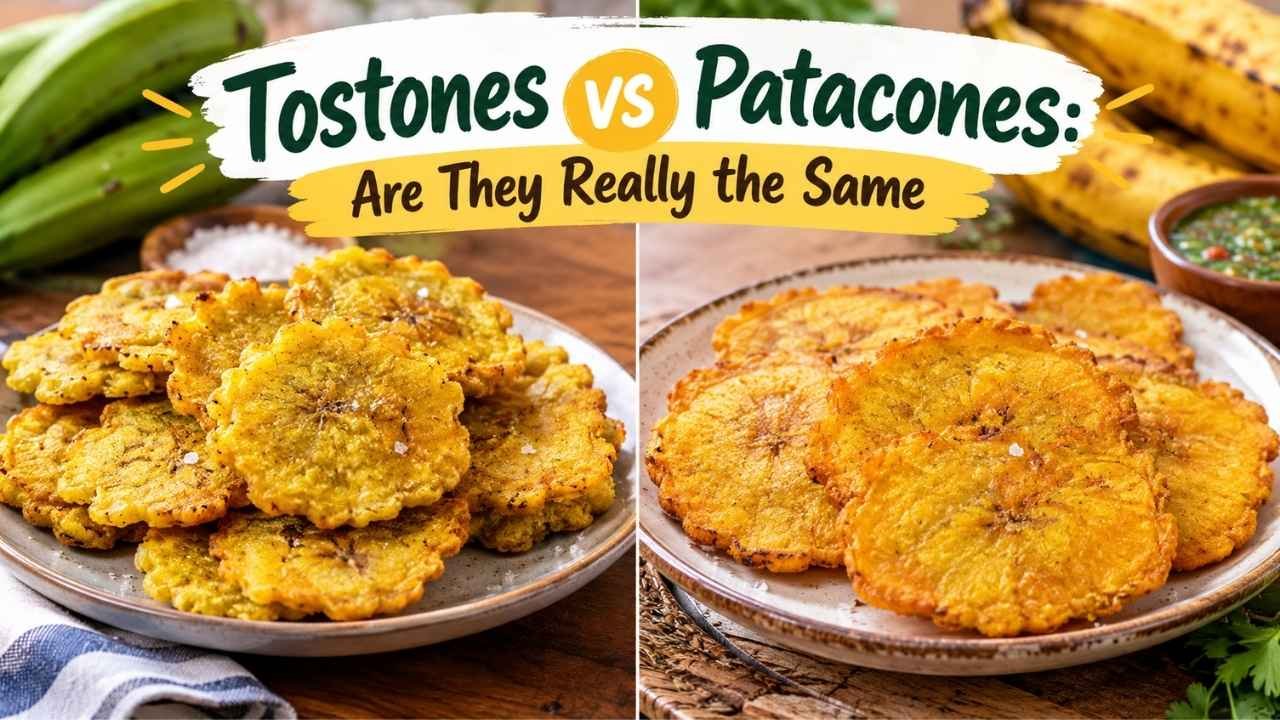
When you see tostones vs. patacones, it is easy to wonder if they are two different foods or simply two names for the same dish. Both are made from green plantains that are fried, flattened, and fried again until crisp. They are popular across Latin American and Caribbean cuisines and can be served as a snack, appetizer, or side dish.
The interesting part is that the names can change depending on the country, region, or even restaurant. In many places, tostones and patacones mean the same twice-fried plantains, while some cooks use the names to describe different shapes or serving styles.
In this guide, we’ll compare tostones and patacones, explain their regional names, cooking methods, taste, texture, and serving ideas.
Quick Answer
Tostones and patacones are generally the same twice-fried green plantain dish. The main difference is usually the name used in different regions. Both are made by frying green plantains, flattening them, and frying them again until crispy. However, their size, shape, toppings, and serving style can vary by country, family recipe, or restaurant.
What Are Tostones?
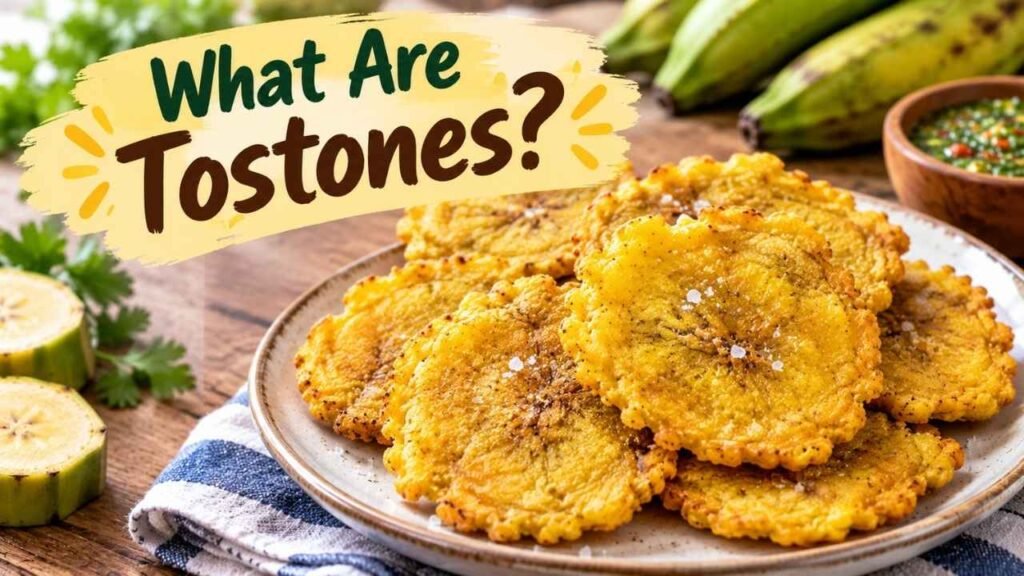
Tostones are crispy pieces of green plantain that are fried twice. The plantain is first cut into thick slices and fried until it becomes tender. It is then flattened and fried again until golden and crisp. This gives tostones their classic crunchy outside and soft, starchy center.
Tostones are especially common in Caribbean cuisine, where they may be served as a snack, appetizer, or side dish. They pair well with garlic sauces, seafood, beans, rice, and other savory foods.
The term can also appear in different Latin American cooking traditions, so it is best not to treat the name as belonging to only one country. In simple terms, tostones are twice-fried green plantains with a savory flavor and crisp texture.
What Are Patacones?
Patacones are thick, flattened pieces of fried green plantain. Like tostones, they are usually prepared by frying the plantain once, flattening it, and frying it again until crispy. They can be served as a side dish, appetizer, snack, or base for other foods.
The word patacones is widely used in parts of northern South America and Central America, although regional food names can overlap. Colombia, Ecuador, Panama, and Venezuela are commonly associated with the term.
Some versions are small and round, while others are larger and thicker. They may also be topped with meat, cheese, vegetables, seafood, or sauces. So, when comparing patacones vs tostones, the cooking method is usually very similar even when the name and presentation change.
Tostones vs Patacones: Main Differences
At their core, tostones and patacones are almost the same food. Both traditionally use green plantains, both are fried twice, and both are flattened before the final fry. The biggest difference is usually regional terminology.
| Feature | Tostones | Patacones |
| Main ingredient | Green plantain | Green plantain |
| Cooking method | Usually twice-fried | Usually twice-fried |
| Texture | Crisp outside, soft center | Crisp outside, soft center |
| Flavor | Savory and starchy | Savory and starchy |
| Shape | Often round or flattened | Round, large, or thick |
| Serving style | Side, snack, appetizer | Side, appetizer, or topped dish |
| Name | Common in Caribbean regions | Common in parts of South America |
These are general patterns, not strict rules. A thick tostón and a thin patacón can look almost identical.
Why Do They Have Different Names?
The different names come mainly from regional food traditions and language. A similar green plantain preparation can be called tostones in one country and patacones in another. This is common in Latin American and Caribbean cooking, where the same basic food can develop different names, shapes, and serving traditions.
For example, tostones are strongly associated with places such as Puerto Rico, Cuba, and the Dominican Republic, while patacones are commonly associated with Colombia, Venezuela, Panama, and Ecuador. Still, these boundaries are not absolute.
This is why searching for where are tostones called patacones or where are patacones called tostones can produce different answers. The safest rule is simple: the name depends on the culinary tradition you are talking about.
Are Tostones and Patacones Actually the Same Food?
In most cases, yes. Tostones and patacones are generally two regional names for the same basic preparation: green plantains that are fried, flattened, and fried again. Their ingredients and cooking method are nearly identical.
However, there is an important detail. A restaurant or local kitchen may choose to give the two names different meanings. For example, one restaurant may call smaller rounds tostones while using patacón for a larger plantain base filled with toppings. That does not mean the wider culinary definitions are different.
So, when asking “are patacones and tostones the same?”, the best answer is: usually, but not always in presentation. The basic food is the same, while local traditions can create differences in size, shape, toppings, and purpose.
How Tostones and Patacones Are Traditionally Made
Traditional tostones and patacones start with firm green plantains. First, the plantain is peeled and cut into thick pieces. These pieces are fried until they soften but do not become fully golden.
Next, each piece is carefully flattened with a plantain press, the bottom of a glass, or another flat tool. The flattened plantain then goes back into hot oil for a second fry. This creates the golden, crispy outside that makes twice-fried plantains so popular.
Finally, the pieces are drained and seasoned with salt. They are best served warm with a dipping sauce or as a side dish. The two-fry process is the key to getting the classic crispy plantain texture.
Green Plantains vs Ripe Plantains
The traditional choice for tostones and patacones is green plantains. At this stage, plantains are firm, starchy, and only mildly sweet. Their texture makes them easy to fry and flatten while keeping a savory flavor.
As plantains ripen, their starch changes into more sugar. The skin becomes yellow, brown, or nearly black, and the flesh becomes softer and sweeter. These ripe plantains are commonly used to make maduros, which are very different from savory tostones.
This means green vs ripe plantains is an important distinction. If you want crisp, savory twice-fried plantains, choose firm green fruit. A plantain with a few yellow-green areas can still work, but one that is fully ripe may produce a noticeably sweeter result.
Why Does Plantain Ripeness Matter So Much?
Plantain ripeness affects taste, texture, and how well the slices hold together. Very green plantains have a firm, starchy texture, making them ideal for traditional tostones and patacones. They also have a mild flavor that works well with salt, garlic, hot sauce, and savory toppings.
A plantain that is just starting to show some yellow may be easier to flatten because it is slightly less firm. However, if it becomes too ripe, it can become sweet and soft. That can make it harder to create the classic savory plantain chip.
For the best fried green plantains, look for fruit that is mostly green and firm. A few yellow-green spots are fine, but avoid plantains that are heavily yellow or soft if you want traditional tostones or patacones.
Tostones vs Patacones: Taste and Texture
The taste and texture of tostones and patacones are usually very similar. Both have a mild, savory plantain flavor with a crisp outer layer and a soft, starchy center. Salt is often enough to make them delicious, but sauces and toppings can add much more flavor.
Thickness can change the eating experience. A thinner piece may have more crisp edges, while a thicker one can have a heartier, softer center. This is why it is difficult to say that tostones are always crispier than patacones or vice versa.
The cooking process matters more than the name. A well-fried patacón or tostón should be golden, crisp, and sturdy enough to hold its shape without becoming dry or hard.
Why Do Tostones Sometimes Become Hard After Cooling?
One common problem with twice-fried plantains is that they can become hard after cooling. The traditional double-frying method produces excellent crispness when the tostones are hot, but the center can become firm as they sit.
One alternative is the boiled-and-fried method. Instead of frying the plantain first, the pieces are boiled until tender, flattened, seasoned, and then fried. This method can create a crispy outside while keeping the inside softer, even after the plantains cool.
If your tostones become rock hard, they may have been cooked too long, flattened too thin, or fried too aggressively. Keeping a little thickness in the center and serving them warm can help.
How Are Tostones and Patacones Served?
Tostones and patacones are flexible foods that can be served in many ways. They make an easy plantain appetizer, snack, or side dish for a larger meal. Their crisp texture makes them especially good with sauces and foods that have a softer texture.
Common pairings include ceviche, seafood, rice, beans, meats, vegetables, and fresh salads. In some places, larger patacones are used as a base for toppings such as meat, cheese, vegetables, or sauces.
You can also serve them simply with salt and a dipping sauce. Laylita suggests options such as ají criollo, hot sauce, chimichurri, cilantro aioli, and salsa rosada. Pickled red onions are another flavorful choice.
Popular Sauces and Toppings for Tostones and Patacones
Because fried green plantains have a mild savory taste, they work well with bold sauces. A simple garlic sauce can add richness, while a spicy sauce gives the crispy plantains more heat.
Popular choices include ají criollo, cilantro-garlic sauce, chimichurri, cilantro aioli, salsa rosada, and hot sauce. Pickled red onions can also add a bright, sharp flavor that balances the fried plantain.For a more filling dish, patacones can be topped with meat, cheese, seafood, avocado, vegetables, or beans. The exact toppings depend on the region and recipe.
If you are serving tostones as a side dish, a simple dipping sauce is usually enough. If you are using a large patacón as a base, you can turn it into a much more complete meal.
Can Tostones and Patacones Be Used Interchangeably?
In most everyday cooking, yes, the terms can be used interchangeably when referring to twice-fried green plantains. If a recipe calls for patacones and you know them as tostones, you can generally follow the same basic method.
The main exception is when a specific region, restaurant, or recipe gives the names different meanings. A restaurant might use “tostones” for small side-dish rounds and “patacón” for a larger topped or stuffed plantain base. That is a local naming choice rather than a universal culinary rule.
So, if you are wondering “can I call patacones tostones?”, the answer is usually yes. Just remember that the exact meaning can change depending on where you are eating or which recipe you are following.
FAQs
Are patacones and tostones the same thing?
Usually, yes. Both are traditionally made from green plantains that are fried, flattened, and fried again. The biggest difference is generally the regional name.
Which is crispier, tostones or patacones?
Neither is automatically crispier. Thickness, oil temperature, and cooking time have a bigger effect on crispness than the name.
Are tostones made with green or ripe plantains?
Traditional tostones use green, unripe plantains. Ripe plantains are generally used for sweeter dishes such as maduros.
Can patacones be made with ripe plantains?
Traditional patacones use green plantains. Some regional or restaurant dishes may use ripe plantains, but these are not the classic savory version.
What is the difference between tostones and maduros?
Tostones are savory and made from green plantains, while maduros are sweet fried plantains made from ripe fruit.
What do you eat with tostones?
Tostones are commonly served with garlic sauces, hot sauces, ceviche, seafood, beans, rice, meat, or vegetables.
Can I use tostones and patacones interchangeably?
Yes, in most recipes. Just check the recipe or menu because local usage can sometimes give the two names different meanings.
Conclusion
When comparing tostones vs. patacones, the simplest answer is that they are usually two names for the same twice-fried green plantain dish. Both begin with green plantains, are fried, flattened, and fried again to create a crisp outside and tender, starchy center.
The main difference is regional naming, although shape, thickness, toppings, and serving style can vary. Some restaurants may even use the two names for different dishes on the same menu.
Whether you call them tostones or patacones, choosing firm green plantains and using the right frying method will give you the best result. Serve them warm with your favorite sauce, seafood, or savory toppings for a simple and satisfying Latin American side or snack.