
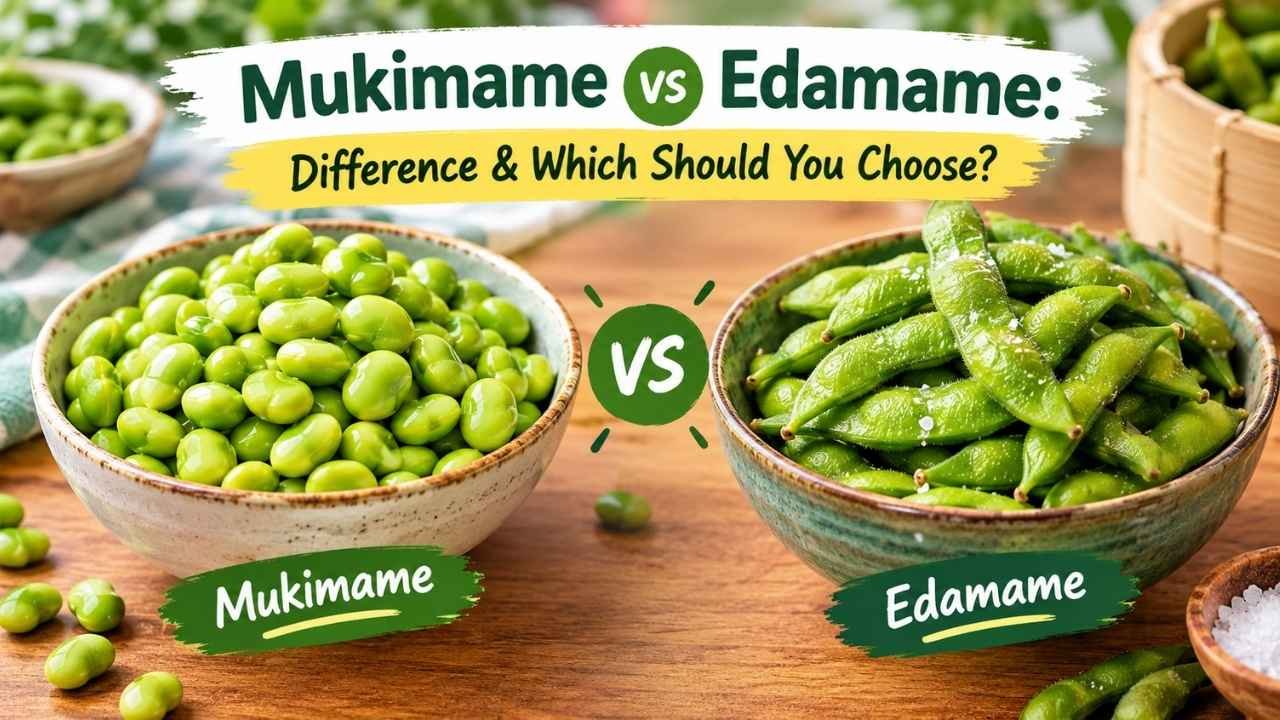
If you’ve ever wondered “mukimame vs edamame”, the short answer is simple: they are the same young soybeans, but served differently. Edamame comes in the pod, while mukimame is already shelled and ready to eat. This small difference changes how you use them in recipes, meal prep, and snacks.
Many people search for the difference between mukimame and edamame because they want to know which is healthier, which has more protein, and whether mukimame can substitute for edamame. Both are rich in plant-based protein, fiber, and important nutrients, but each works better in certain situations.
In this guide, you’ll learn what mukimame is, what edamame is, how their nutrition compares, and which option is best for salads, stir-fries, meal prep, or snacking.
Quick Answer
Mukimame and edamame are the same young soybeans, but edamame is served in the pod while mukimame is already shelled. Edamame is popular as a snack or appetizer because you eat the beans from the pod, while mukimame is more convenient for salads, grain bowls, stir-fries, and meal prep. Nutritionally, they are very similar, with both providing protein, fiber, and important nutrients. The main difference is convenience and how you plan to use them.
What Is Mukimame?

Mukimame is the Japanese name for shelled edamame. These are young green soybeans that have already been removed from their pods, making them quick and easy to use. If you are comparing mukimame vs edamame, the biggest difference is convenience.
Mukimame can be added directly to salads, grain bowls, stir-fries, and meal-prep containers without any extra work. It has a mild, slightly sweet flavor and a soft texture.
Because it is already shelled, many people choose it when they want a fast source of plant-based protein and fiber. If you enjoy cooking Asian-inspired dishes, you may also find our guide on Substitute Dark Soy Sauce helpful when adapting recipes.
What Is Edamame?
Edamame refers to young soybeans that are still inside their pods. The pods are usually steamed, boiled, or lightly salted before serving. When people ask, “is mukimame the same as edamame?” the answer is yes—the beans are the same, but edamame is served in the pod while mukimame is already shelled.
Edamame is popular as a snack, appetizer, and side dish because eating the beans from the pod creates a fun eating experience. It is also rich in protein, fiber, and important nutrients.
In many Japanese restaurants, edamame is served warm with sea salt. If you enjoy experimenting with flavors, our article on Sweet Chili Sauce Substitutes can help you create a different dipping sauce.
Mukimame vs Edamame: Quick Comparison Table
| Feature | Mukimame | Edamame |
| Pod | Shelled | In the pod |
| Convenience | Very high | Moderate |
| Best for | Salads, bowls, stir-fries | Snacks, appetizers |
| Texture | Soft | Firm beans in pod |
| Prep time | Minimal | Requires shelling |
| Nutrition | Very similar | Very similar |
This quick table shows the difference between mukimame and edamame at a glance. Both are nutritious young soybeans, but mukimame saves time because the beans are already removed from the pod.
Are Mukimame and Edamame the Same Thing?
Yes, mukimame and edamame are the same young soybeans. The difference is only in how they are prepared and served. Edamame is sold in the pod, while mukimame is the shelled version.
This is why many people search for “what is the difference between mukimame and edamame” before shopping. Nutritionally, they are almost identical because the beans themselves are the same.
However, mukimame is usually easier to use in recipes because you can add it directly to dishes. Edamame, on the other hand, is often enjoyed as a snack or appetizer. If you are planning a vegetable-based meal, you may also find our guide on Substitutes For Fennel useful for making simple ingredient swaps.
Nutrition Comparison
When comparing mukimame vs edamame nutrition, the numbers are very close. Both provide a good amount of plant-based protein, dietary fiber, iron, and potassium.
A typical serving contains around 8–12 grams of protein and a similar amount of fiber, depending on the brand and preparation method. The mukimame calories and edamame calories are also nearly the same because the beans are identical.
The main difference is that mukimame is measured without the pod, while edamame is often sold with the pod included. For people looking for a filling snack or a protein-rich addition to meals, both options are excellent choices. They work especially well in healthy bowls, salads, and stir-fries.
Which Has More Protein?
Many readers ask, “which has more protein, mukimame or edamame?” The answer is that the protein content is almost the same because both come from the same soybean.
The only small difference may come from serving size and whether the pods are included in the weight. If you compare equal amounts of shelled beans, mukimame protein and edamame protein are nearly identical.
Both are considered a good source of complete plant-based protein, which means they provide all essential amino acids. This makes them a popular choice for vegetarians, vegans, and anyone trying to add more protein to their diet. For meal prep, many people prefer mukimame because the beans are already shelled and ready to eat.
Taste and Texture Differences
The mukimame vs edamame taste difference is small, but the eating experience feels different. Mukimame has a soft texture and a mild, slightly sweet flavor. Because it is already shelled, the beans are easy to mix into salads, rice bowls, and stir-fries.
Edamame has the same flavor, but the pods create a more interactive snack. You squeeze the beans from the pod before eating them, which many people enjoy.
In terms of mukimame vs edamame texture, mukimame feels smoother, while edamame feels firmer because the beans are eaten fresh from the pod. If you want a quick ingredient for cooking, mukimame is often more convenient. If you want a snack or appetizer, edamame is usually the better choice.
Which Is Better for Meal Prep?
For weekly meal prep, mukimame is usually the better choice. The beans are already shelled, so you can add them directly to lunch boxes, grain bowls, salads, and stir-fries. This saves time and reduces cleanup.
When comparing mukimame vs edamame for meal prep, convenience is the biggest advantage. Edamame still works well, but you need to remove the beans from the pods before mixing them into most dishes.
Mukimame also stores easily in the freezer and reheats quickly, making it a practical option for busy schedules. If your goal is to prepare healthy meals ahead of time, mukimame can make the process much faster while still providing the same protein, fiber, and nutrients as regular edamame.
Which Is Better for Salads, Bowls, and Stir-Fries?
For salads, grain bowls, and stir-fries, mukimame is usually the easier option. The beans are already shelled, so you can add them directly to the dish without any extra prep. This makes mukimame vs edamame for salads an easy decision for many home cooks.
Mukimame mixes well with rice, quinoa, vegetables, and sauces, and it keeps its texture after reheating. In a stir-fry, the shelled beans spread evenly through the dish and cook quickly.
Edamame can still be used, but the beans must be removed from the pods first. If your goal is a fast lunch, a grain bowl, or a vegetable-packed stir-fry, mukimame is generally the more practical and convenient choice.
Which Is Better for Snacking?
When comparing mukimame vs edamame for snacking, edamame is usually the winner. The pods create a fun, interactive eating experience because you squeeze the beans out before eating them.
This is one reason edamame is often served as an appetizer in Japanese restaurants. A bowl of warm, lightly salted edamame feels more like a snack than a prepared ingredient.
Mukimame can still be eaten as a snack, especially when seasoned with salt, chili, or garlic, but it lacks the pod experience that many people enjoy. If your goal is a quick, protein-rich snack while watching TV or entertaining guests, edamame is generally the better choice. If convenience matters most, mukimame is still a great option.
Can You Substitute Mukimame for Edamame?
Yes, you can substitute mukimame for edamame in most recipes because the beans are the same. This is one of the most common questions people ask when searching for the difference between mukimame and edamame.
For salads, grain bowls, fried rice, soups, and stir-fries, mukimame often works even better because it is already shelled. If a recipe calls for edamame in the pod, however, mukimame will change the presentation and texture.
In appetizer dishes where guests eat the beans directly from the pod, regular edamame is the better choice. For everyday cooking, the substitution is usually easy and convenient. If you want to save time during meal prep, mukimame is often the simpler option.
Storage, Freezing, and Reheating
Both mukimame and edamame store well in the refrigerator and freezer. Fresh packages should be kept chilled and used within a few days, while frozen versions can last for several months.
When comparing frozen mukimame and frozen edamame, the main difference is convenience. Mukimame can be reheated and added directly to a meal, while edamame may need to be served in the pod. To reheat either one, steam, microwave, or quickly boil the beans until hot.
Avoid overcooking, as this can make the beans soft and reduce their fresh flavor. If you prepare lunches ahead of time, frozen mukimame is especially useful because it thaws quickly and mixes easily into salads, bowls, and stir-fries.
Cost Per Edible Serving
One factor many shoppers overlook in the mukimame vs edamame debate is the cost per edible serving. Edamame is often sold with the pods included, so part of the weight is not eaten.
Mukimame contains only the shelled beans, which means the entire package is edible. Because of this, mukimame may provide more usable food for the price, even if the package appears slightly more expensive.
The actual difference depends on the brand and store, but it is worth considering if you buy soybeans regularly. If you mainly use the beans in salads, grain bowls, soups, or stir-fries, mukimame can be a cost-effective option. If you enjoy the pod experience as a snack, edamame may still be worth the extra waste.
Which One Should You Buy?
If you are still deciding which is healthier, mukimame or edamame, the truth is that both are excellent choices. Their nutrition is very similar because they are the same young soybeans. The best option depends on how you plan to use them.
Choose edamame if you want a snack, appetizer, or a fun dish to share with guests. Choose mukimame if you want a quick ingredient for salads, grain bowls, stir-fries, soups, or meal prep. For busy weekdays, many people find mukimame more convenient because the beans are already shelled.
For entertaining or casual snacking, edamame often feels more satisfying. In the end, the mukimame vs edamame decision is less about nutrition and more about convenience, cooking style, and personal preference.
FAQs
Is mukimame the same as edamame?
Yes. Mukimame and edamame are the same young soybeans. The difference is that edamame is served in the pod, while mukimame is already shelled and ready to use.
What is the difference between mukimame and edamame?
The main difference between mukimame and edamame is convenience. Edamame comes in the pod and is often eaten as a snack or appetizer, while mukimame is shelled and works well in salads, grain bowls, soups, and stir-fries.
Which is healthier: mukimame or edamame?
Neither is significantly healthier than the other. Their nutrition is very similar because the beans are the same. Both provide protein, fiber, iron, and other important nutrients.
Which has more protein, mukimame or edamame?
Mukimame protein and edamame protein are almost identical when comparing equal amounts of shelled beans. Both are excellent sources of complete plant-based protein.
Can you substitute mukimame for edamame?
Yes. You can substitute mukimame for edamame in most recipes, especially salads, bowls, soups, fried rice, and stir-fries. The only time regular edamame is preferred is when the pods are part of the presentation.
Is frozen mukimame good for meal prep?
Yes. Frozen mukimame is one of the easiest ingredients for meal prep because it reheats quickly and can be added directly to prepared meals without shelling.
Conclusion
When comparing mukimame vs edamame, the biggest difference is not nutrition—it is how you use them. Edamame is served in the pod and is perfect for snacking, appetizers, and sharing with guests.
Mukimame is already shelled, making it faster and more convenient for salads, grain bowls, stir-fries, soups, and weekly meal prep.
Both options are rich in plant-based protein, fiber, and important nutrients, so you do not need to worry much about which one is healthier. If convenience and quick cooking matter most, choose mukimame. If you enjoy the traditional pod-eating experience, choose edamame.
For most home cooks, keeping both on hand is ideal: edamame for snacks and appetizers, and mukimame for everyday meals and meal prep.
1 thought on “Mukimame vs Edamame: Difference & Which Should You Choose?”