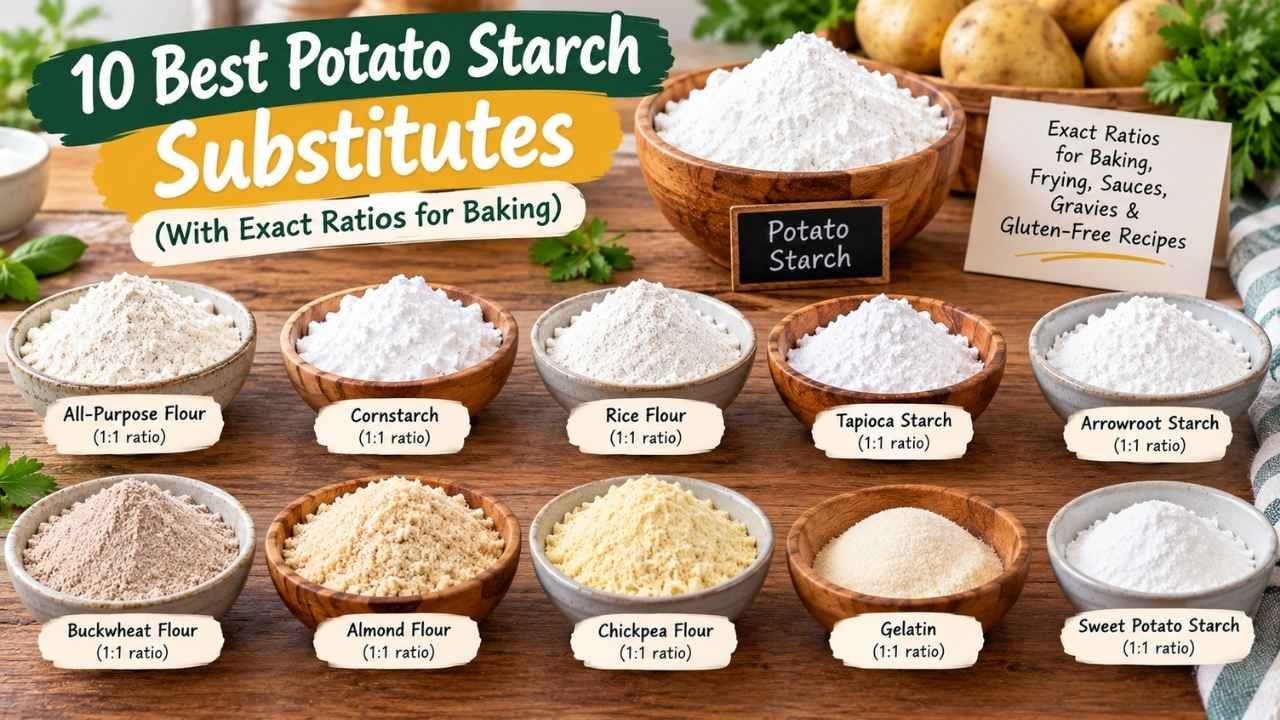
If you are out of potato starch, don’t worry — there are several easy substitutes that can save your recipe. Whether you need a potato starch substitute for baking, frying, or thickening a sauce, the best choice depends on what you are cooking.
Cornstarch, tapioca starch, arrowroot powder, and rice flour are among the most reliable potato starch alternatives. Some work better for crispy coatings, while others are ideal for cakes, cookies, gravies, or pie fillings.
This guide will help you replace potato starch with confidence by explaining the best substitutes, exact potato starch substitute ratios, and the texture you can expect from each option. By the end, you’ll know what can I use instead of potato starch and which substitute works best for your specific recipe.
Quick Answer
The best potato starch substitute is usually cornstarch for thickening sauces and gravies because it works in a 1:1 ratio. For gluten-free baking, tapioca starch is often the closest match. Arrowroot powder works well in fruit fillings and acidic recipes, while rice flour is excellent for crispy frying. If you’re wondering what can I use instead of potato starch, choose the substitute based on whether you are baking, frying, or thickening a dish.
Best Potato Starch Substitute at a Glance
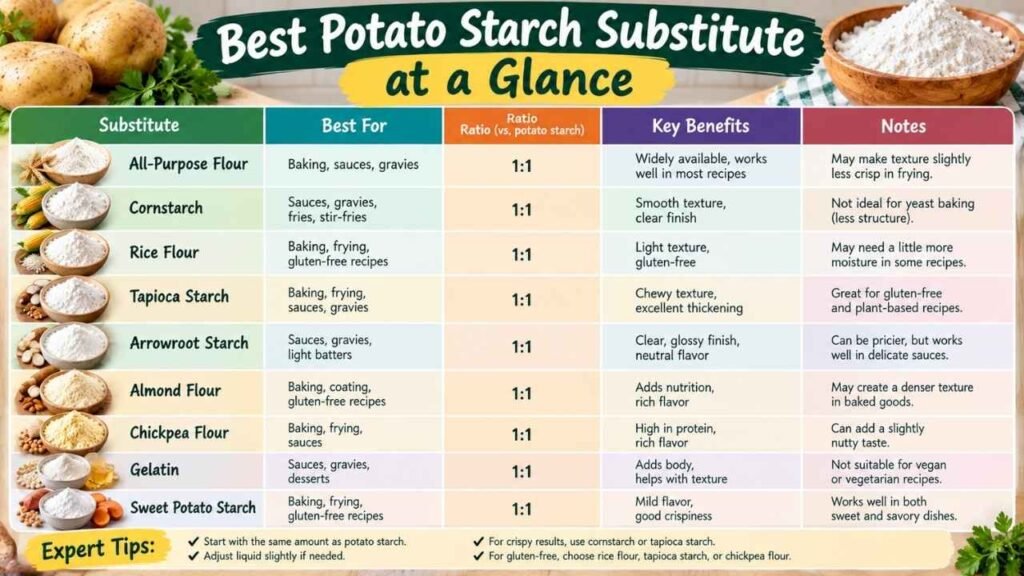
If you need a potato starch substitute, the best option depends on your recipe. Cornstarch is usually the easiest choice for thickening sauces and gravies because it works in a 1:1 ratio. Tapioca starch is a great gluten-free substitute for cakes, cookies, and other baked goods.
Arrowroot powder works well in fruit fillings and acidic recipes because it creates a clear, glossy texture. Rice flour is excellent for frying and gives food a crispy coating. If you are making soup, gravy, or a sauce, cornstarch is often the best choice.
For baking, tapioca starch is usually the closest match. Choosing the right potato starch alternative can help you keep the same texture and flavor in your dish.
What Does Potato Starch Do in Recipes?
Before choosing a substitute for potato starch, it helps to know why recipes use it. Potato starch acts as a thickener for sauces, soups, and gravies by absorbing liquid and creating a smooth texture. In frying, it helps form a light and crispy coating.
In baking, it adds moisture and softness to cakes, cookies, and breads. It is also popular in gluten-free baking because it helps bind ingredients together. When people ask “what can I use instead of potato starch”, the answer depends on which of these jobs the starch is performing.
A good substitute should match the recipe’s purpose, whether that is thickening, crisping, or adding moisture. This is why one substitute may work perfectly in gravy but not in a cake.
Best Overall Substitute – Cornstarch
Cornstarch is often the best overall potato starch replacement because it is easy to find and works in many recipes. Use it in a 1:1 ratio for most sauces, gravies, soups, and stir-fries. It thickens quickly and creates a smooth texture.
Compared with potato starch, cornstarch can make sauces slightly more opaque, but the difference is usually small. It is also useful when you need a fast potato starch substitute for thickening. However, it is not always the best option for gluten-free baking or recipes that need extra chewiness.
If you are making gravy, soup, or a simple sauce, cornstarch is usually the safest choice. For readers who enjoy trying different cuisines, dishes such as Moqueca Da Banana Da Terra often show how starches help create rich, smooth textures.
Best for Gluten-Free Baking – Tapioca Starch
Tapioca starch is one of the best choices for gluten-free baking. It gives baked goods a soft, slightly chewy texture that is similar to recipes made with potato starch. You can usually use it in a 1:1 ratio when replacing potato starch in cakes, cookies, and muffins.
Tapioca starch also helps retain moisture, which keeps baked goods from drying out too quickly. Many bakers prefer it when making gluten-free bread or pastries because it improves structure and elasticity.
If you are searching for a potato starch substitute for baking, tapioca starch is often the closest match. It works especially well in recipes that need a tender crumb and a light texture, making it a reliable option for everyday baking.
Best for Pie Fillings & Acidic Recipes – Arrowroot Powder
Arrowroot powder is an excellent potato starch substitute for fruit pies, lemon desserts, and other acidic recipes. Unlike some starches, it creates a clear glossy sauce instead of a cloudy one. You can usually replace potato starch with arrowroot in a 1:1 ratio.
It works well in berry fillings, citrus sauces, and homemade jams. One important tip is to avoid boiling arrowroot for a long time because excessive heat can reduce its thickening power.
If your recipe includes lemon juice, vinegar, or other acidic ingredients, arrowroot is often a better choice than cornstarch. This makes it a useful potato starch substitute for pie filling and fruit-based desserts where appearance and texture are both important.
Best for Frying – Rice Flour
Rice flour is one of the best options for creating an extra-crispy coating. It works well as a potato starch substitute for frying because it absorbs less oil and helps food stay light and crunchy. Use it in a 1:1 ratio for fried chicken, tempura, vegetables, and seafood. The texture is often crispier than all-purpose flour and stays crunchy for longer after cooking.
Rice flour is also naturally gluten-free, which makes it a good choice for people avoiding wheat. If you want a crispy exterior without a heavy coating, rice flour is an excellent alternative. Recipes such as a Romano Beans Recipe can pair nicely with light fried toppings or crispy garnishes made using rice flour.
Can You Use All-Purpose Flour Instead?
Yes, you can use all-purpose flour as a substitute for potato starch, but it is not the closest match. Flour has less thickening power, so you will usually need about 2 tablespoons of flour for every 1 tablespoon of potato starch. It works best in gravies, soups, and simple sauces where a slightly thicker texture is acceptable.
However, flour can make sauces cloudier and heavier than potato starch. It is also not suitable for gluten-free recipes. If you are in a hurry and do not have cornstarch, tapioca starch, or arrowroot powder, all-purpose flour can still save the recipe. Just remember that the final texture may be denser and less smooth than the original version.
Potato Starch Substitute Ratio Chart
Using the correct potato starch substitute ratio is important for getting the right texture. For most recipes, 1 tablespoon potato starch = 1 tablespoon cornstarch. The same 1:1 ratio usually works for tapioca starch, arrowroot powder, and rice flour. If you are using all-purpose flour, use 2 tablespoons flour for every 1 tablespoon potato starch.
When measuring larger amounts, ¼ cup potato starch can be replaced with ¼ cup cornstarch, tapioca starch, or arrowroot powder. Accurate measurements help prevent sauces from becoming too thin or baked goods from becoming too dry. If you are unsure which substitute to choose, start with cornstarch for cooking and tapioca starch for baking.
Potato Starch vs. Potato Flour
Many people confuse potato starch and potato flour, but they are not the same ingredient. Potato starch is made from the starch extracted from potatoes, while potato flour is made from whole cooked potatoes that are dried and ground into powder. Potato flour has a stronger potato flavor and absorbs more liquid.
It can work in some yeast breads and doughs, but it is not always a direct potato starch replacement. If a recipe needs light thickening or a crispy coating, potato flour may not give the same results. Use potato flour mainly in breads and baked goods where a mild potato flavor is acceptable. For sauces, gravies, and frying, cornstarch or tapioca starch is usually a better substitute.
Substitute by Recipe Type
The best potato starch substitute changes depending on the recipe. For gravy and soup, cornstarch is usually the easiest choice. For pie filling or fruit desserts, arrowroot powder gives a smooth, glossy finish.
For fried chicken and tempura, rice flour creates a crispy texture. For cake and cookies, tapioca starch helps keep the crumb soft and moist. For bread, potato flour can add tenderness and improve texture.
Choosing a substitute based on the recipe gives better results than using the same ingredient for every dish. If you enjoy exploring different cuisines, many Traditional Italian Dishes also rely on starches and flours to achieve the right texture in sauces, breads, and fried foods.
Choosing a Substitute for Special Diets
If you follow a special diet, the right potato starch alternative becomes even more important. For gluten-free recipes, choose tapioca starch, arrowroot powder, or rice flour because they do not contain wheat. For vegan cooking, all of these starch-based substitutes work well.
If you are looking for a potato starch substitute without cornstarch, arrowroot powder and tapioca starch are excellent options. For keto diets, arrowroot is sometimes used in small amounts, but many keto cooks prefer lower-carb thickeners.
For paleo recipes, tapioca starch and arrowroot powder are usually the most popular choices. Always check the recipe’s dietary requirements before selecting a substitute so the final dish matches your needs.
Common Mistakes When Replacing Potato Starch
One common mistake is using all-purpose flour in a 1:1 ratio. Flour is less powerful, so the sauce may stay thin. Another mistake is adding starch directly to hot liquid, which can create lumps. Instead, mix it with cold water first to make a slurry.
Many people also boil arrowroot powder for too long, which can weaken its thickening ability. Ignoring the recipe’s acidity is another problem because some substitutes work better with lemon juice or fruit fillings than others.
When asking “what is the best substitute for potato starch”, remember that the answer depends on the recipe. Matching the substitute to the cooking method is the easiest way to avoid texture problems.
FAQs
What can I use instead of potato starch?
The best options are cornstarch, tapioca starch, arrowroot powder, and rice flour. Choose the substitute based on whether you are thickening, baking, or frying.
Can I substitute cornstarch for potato starch?
Yes. In most sauces and gravies, cornstarch works in a 1:1 ratio and is one of the easiest replacements.
What is the best substitute for frying?
Rice flour is usually the best choice because it creates a light and crispy coating.
What is the best substitute for baking?
Tapioca starch is often the closest match for gluten-free cakes, cookies, and breads.
Is potato flour the same as potato starch?
No. Potato flour is made from whole potatoes, while potato starch is extracted starch. They behave differently in recipes.
Which substitute is gluten-free?
Tapioca starch, arrowroot powder, and rice flour are all gluten-free options.
Conclusion
Finding the right potato starch substitute is easier once you know what the starch is doing in your recipe. Cornstarch is usually the best all-around choice for thickening sauces, soups, and gravies.
Tapioca starch works especially well in gluten-free baking, while arrowroot powder is ideal for fruit fillings and acidic recipes. If you want a crispy coating for frying, rice flour is one of the best alternatives.
The key is to match the substitute to the cooking method and use the correct potato starch substitute ratio. Whether you are baking a cake, making gravy, frying chicken, or preparing a pie filling, there is a reliable replacement available. With the options in this guide, you can confidently replace potato starch without sacrificing texture or flavor.