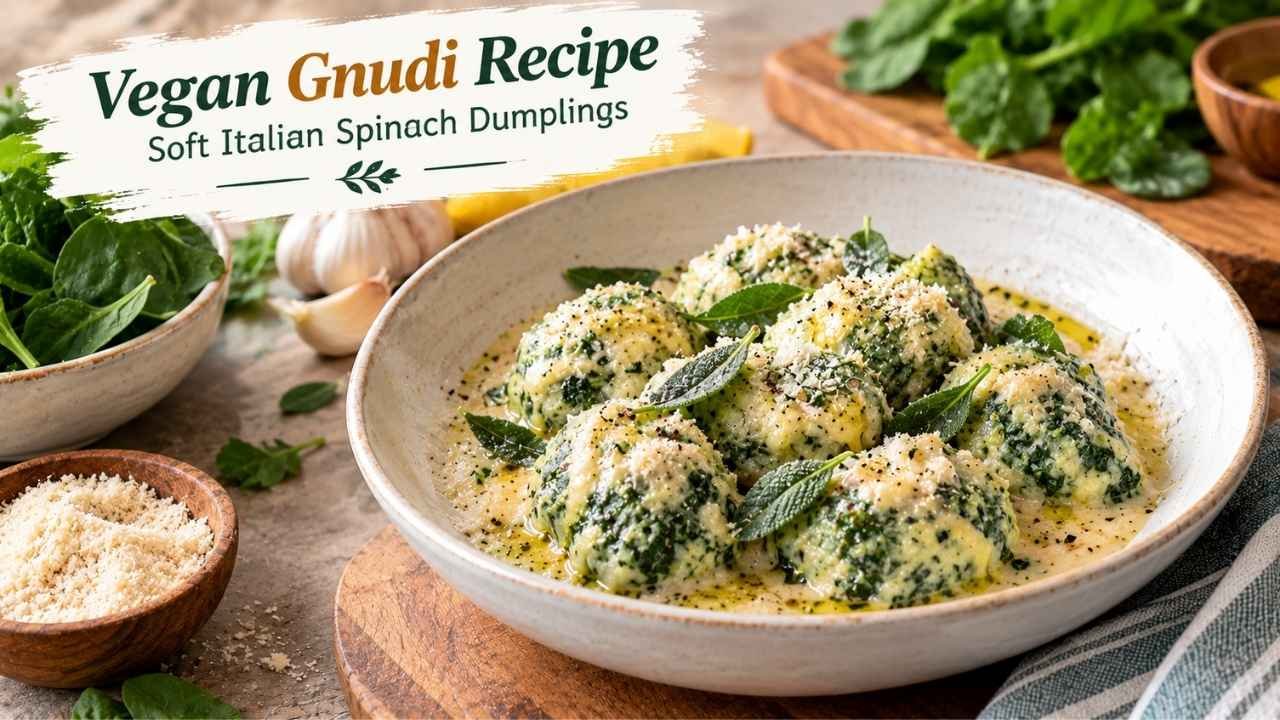
If you’re looking for a vegan gnudi recipe that turns out soft, pillowy, and full of authentic Italian flavor, you’re in the right place. These delicate Italian dumplings are made with vegan ricotta, fresh spinach, and simple pantry ingredients, creating a comforting meal that’s completely dairy-free and egg-free.
Unlike gnocchi, gnudi have a lighter texture that melts in your mouth, making them a favorite for cozy dinners and special occasions alike. This homemade vegan gnudi recipe is beginner-friendly, with easy step-by-step instructions, helpful tips, and troubleshooting advice to help you succeed on your first try.
Whether you serve your vegan spinach gnudi with rich marinara sauce, fragrant sage butter, or a flavorful walnut pesto, you’ll enjoy a delicious plant-based Italian recipe that’s both satisfying and surprisingly simple to make at home.
Quick Answer
Vegan gnudi are soft Italian spinach and vegan ricotta dumplings made without dairy or eggs. This vegan gnudi recipe combines vegan ricotta, spinach, flour, and seasonings to create light, pillowy dumplings that are boiled until tender. They’re easy to make, beginner-friendly, and delicious with marinara sauce, sage butter, or walnut pesto. Whether you’re looking for an authentic vegan gnudi recipe, a comforting plant-based Italian dinner, or a creative way to use tofu ricotta, this homemade recipe delivers rich flavor, a delicate texture, and reliable results every time.
Why You’ll Love This Vegan Gnudi Recipe
This vegan gnudi recipe is perfect if you love comforting Italian food that’s easy to make at home. These soft, pillowy dumplings are prepared with vegan ricotta, fresh spinach, and simple pantry ingredients, giving you a delicious dairy-free and egg-free meal without sacrificing flavor.
The recipe uses beginner-friendly steps, so even first-time cooks can enjoy success. You can pair these Italian vegan dumplings with marinara sauce, sage butter, or walnut pesto for a satisfying dinner.
If you enjoy Mediterranean-inspired dishes, don’t miss our Mutabal Recipe, a smoky eggplant dip that makes a wonderful appetizer. For another classic Italian favorite, try our Pasta all’Assassina Recipe, known for its rich tomato flavor and crispy pasta.
What Makes This Recipe Authentic?
This homemade vegan gnudi recipe stays true to traditional Italian cooking by keeping the ingredient list simple and letting fresh flavors stand out. Instead of dairy ricotta, it uses well-seasoned tofu ricotta, which creates a creamy texture similar to the classic version. Fresh spinach, vegan parmesan, garlic, and herbs bring authentic flavor without making the dish complicated.
The dumplings are gently cooked until they become soft and pillowy, just like traditional gnudi. Serving them with sage butter, marinara sauce, or walnut pesto keeps the focus on simple, rustic ingredients. This balance of tradition and modern plant-based cooking makes the recipe feel both authentic and easy for home cooks.
Ingredients You’ll Need
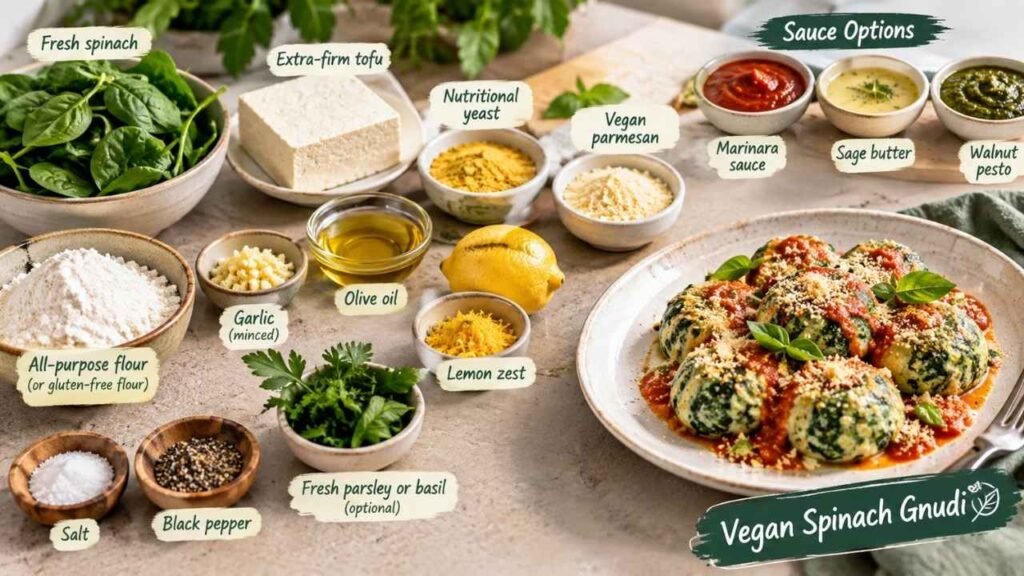
Extra-firm tofu: Use it to make a creamy vegan ricotta that holds its shape well.
Frozen spinach: Thaw completely and squeeze out excess water to prevent sticky dough.
All-purpose flour: Helps bind the gnudi. Use a gluten-free flour blend if needed.
Nutritional yeast: Adds a rich, cheesy flavor without dairy.
Vegan Parmesan: Provides extra cheesy flavor and depth.
Parsley: Adds freshness; you can substitute basil or fresh sage.
Easy swaps: These substitutions make homemade vegan gnudi soft, flavorful, and suitable for different diets.
For the Vegan Gnudi
- Fresh spinach (or frozen spinach, well-drained)
- Extra-firm tofu
- Nutritional yeast
- Vegan parmesan
- All-purpose flour (or gluten-free flour if needed)
- Garlic, minced
- Olive oil
- Lemon zest
- Salt
- Black pepper
- Fresh parsley or basil (optional)
For the Sauce
- Marinara sauce, sage butter, or walnut pesto
- Extra vegan parmesan for serving
- Fresh sage or basil for garnish
Ingredient Notes and Easy Substitutions
The right ingredients make a big difference in this vegan gnudi recipe. Use extra-firm tofu to make a creamy vegan ricotta that holds its shape well. If you only have frozen spinach, thaw it completely and squeeze out as much water as possible to prevent sticky dough. All-purpose flour works well, but you can use a gluten-free flour blend if needed.
Nutritional yeast and vegan parmesan add a rich, cheesy flavor without dairy. You can also replace parsley with basil or fresh sage for a different taste. These simple swaps help you create homemade vegan gnudi that are soft, flavorful, and perfect for different diets without changing the recipe too much.
Kitchen Equipment
You don’t need special tools to prepare this easy vegan gnudi recipe. A food processor quickly blends the tofu ricotta until smooth, but a fork works if you don’t mind a slightly chunkier texture. Use a large mixing bowl to combine the ingredients and a measuring cup or cookie scoop to portion the dough evenly.
A wide pot is best for gently boiling the Italian vegan dumplings, while a slotted spoon helps lift them without breaking. You’ll also need a clean kitchen towel or cheesecloth to squeeze water from the spinach. Having the right equipment makes the process easier and helps your vegan spinach gnudi cook evenly every time.
How to Make Vegan Gnudi
Step 1 – Prepare the Spinach
Wash the fresh spinach and cook it until wilted. If using frozen spinach, thaw it completely first. Let it cool, then squeeze out as much water as possible with a clean kitchen towel. This step is important because excess moisture can make the dough too soft. Finely chop the spinach before mixing it with the other ingredients. Well-drained spinach helps create soft, pillowy vegan gnudi that hold together while cooking.
Step 2 – Make Vegan Ricotta
Add the extra-firm tofu, nutritional yeast, vegan parmesan, garlic, olive oil, lemon zest, salt, and black pepper to a food processor. Blend until smooth and creamy with a little texture remaining. This vegan ricotta gives the dumplings a rich flavor while keeping them completely plant-based. Taste and adjust the seasoning, then gently mix in the chopped spinach until well combined.
Step 3 – Mix the Dough
Transfer the spinach mixture to a large bowl and gradually add the flour. Stir gently until a soft, slightly sticky dough forms. Avoid using too much flour, as it can make the dumplings dense. If the dough feels too wet, add a little more flour until it’s easy to shape. A light touch helps create homemade vegan gnudi with a tender, melt-in-your-mouth texture.
Step 4 – Chill the Mixture
Cover the bowl and refrigerate the dough for at least 30 minutes. Chilling allows the flour to absorb moisture, making the mixture firmer and easier to shape. It also helps prevent the vegan gnudi from falling apart during cooking. While the dough rests, prepare your favorite sauce, such as marinara sauce, sage butter, or walnut pesto.
Step 5 – Shape the Gnudi
Lightly flour your hands and scoop small portions of dough. Roll each portion into walnut-sized balls, keeping them as even as possible for uniform cooking. If the dough sticks, dust your hands with a little flour instead of adding more to the mixture. Place the shaped dumplings on a lightly floured tray until you’re ready to cook them.
Step 6 – Cook Until Tender
Bring a large pot of salted water to a gentle simmer. Carefully add a few vegan gnudi at a time and cook for 3 to 4 minutes, or until they float to the surface. Lift them out gently with a slotted spoon. Cooking in small batches and avoiding a rapid boil helps the dumplings stay soft and hold their shape.
Step 7 – Prepare the Sauce
Warm your favorite sauce while the dumplings cook. Marinara sauce, sage butter, and walnut pesto are all excellent choices. Gently toss the cooked vegan gnudi in the warm sauce until lightly coated. A simple sauce enhances the delicate flavor without overpowering the dumplings.
Step 8 – Serve and Garnish
Serve the homemade vegan gnudi warm with extra vegan parmesan, fresh basil or parsley, and a little lemon zest if desired. Pair with a green salad or crusty bread for a complete plant-based Italian meal. The result is a plate of soft, creamy Italian dumplings that are both comforting and full of fresh flavor.
Expert Tips for Perfect Vegan Gnudi
For the best vegan gnudi recipe, always squeeze as much water as possible from the spinach before mixing the dough. Too much moisture is the main reason dumplings become soft and fall apart. Use extra-firm tofu for a thick, creamy vegan ricotta, and avoid overmixing once you add the flour.
Chilling the dough before shaping makes it much easier to handle and improves the texture. Cook the dumplings in gently simmering water instead of a rolling boil to keep them intact. Finally, coat the cooked vegan gnudi gently with your favorite sauce and serve immediately for the softest, most flavorful results.
Common Mistakes to Avoid
Small mistakes can affect the texture of your vegan gnudi. Leaving too much water in the spinach creates a wet dough that is difficult to shape. Adding excessive flour makes the dumplings dense instead of soft and pillowy. Skipping the chilling step often causes the gnudi to lose their shape while cooking.
Another common mistake is boiling the water too hard, which can break the delicate dumplings apart. Always cook them in small batches and remove them gently with a slotted spoon. Following these simple tips will help you enjoy homemade vegan gnudi with a light texture and authentic Italian flavor every time.
Why Does Gnudi Fall Apart?
If your vegan gnudi fall apart during cooking, the dough usually contains too much moisture or not enough binding ingredients. Spinach that hasn’t been squeezed dry and vegan ricotta that is too wet are the most common causes. Chilling the dough before shaping also helps it become firmer.
Make sure the cooking water is at a gentle simmer instead of a strong boil, as rough water can break the dumplings. If needed, add a small amount of flour to strengthen the mixture, but don’t overdo it. With the right balance of ingredients and careful cooking, your vegan gnudi recipe will stay tender while holding its shape perfectly.
Best Sauces for Vegan Gnudi
The beauty of vegan gnudi is that they pair well with many simple sauces. A classic marinara sauce adds freshness and a rich tomato flavor, while sage butter gives the dumplings a warm, earthy taste. Walnut pesto brings a creamy, nutty finish that works especially well with spinach and vegan ricotta.
If you prefer something lighter, try a lemon garlic olive oil sauce with fresh herbs. Creamy mushroom sauce is another delicious option for a comforting meal. Choose a sauce that lightly coats the dumplings so their delicate texture and authentic Italian flavor remain the highlight of every bite.
Delicious Variations
This vegan gnudi recipe is easy to customize based on your preferences. For a high-protein vegan gnudi, add a little more extra-firm tofu or mix in protein-rich legumes. To make a gluten-free vegan gnudi recipe, replace regular flour with your favorite gluten-free blend. If you have a nut allergy, skip walnut-based sauces and use a simple marinara sauce or herb dressing instead.
Fresh basil, parsley, or dill can also change the flavor without adding extra work. These simple variations let you enjoy homemade vegan gnudi in different ways while keeping the dumplings soft, satisfying, and full of fresh Italian-inspired flavor.
What to Serve with Vegan Gnudi
Vegan gnudi pair beautifully with simple side dishes that complement their delicate texture. A crisp green salad with a light lemon dressing adds freshness, while roasted vegetables bring extra color and flavor to the meal. Warm garlic bread or crusty artisan bread is perfect for soaking up extra marinara sauce or walnut pesto.
You can also serve these Italian spinach and vegan ricotta dumplings with grilled asparagus or sautéed mushrooms for a complete dinner. Keep the sides simple so the soft, creamy dumplings remain the center of the plate. Together, they create a satisfying plant-based Italian meal everyone will enjoy.
Storage Tips
Store leftover vegan gnudi in an airtight container once they have cooled completely. Keep them in the refrigerator for up to 3 days. If possible, store the dumplings and sauce separately to help maintain their soft texture. When you’re ready to enjoy them again, reheat them gently instead of using high heat.
Proper storage keeps the homemade vegan gnudi fresh and prevents them from becoming soggy. This recipe is also great for meal prep because the dumplings keep their flavor well. Always refrigerate leftovers promptly to maintain the best taste and quality.
Can You Freeze Vegan Gnudi?
Yes, vegan gnudi freeze very well. Arrange the uncooked dumplings on a baking tray lined with parchment paper and freeze them until firm. Once frozen, transfer them to a freezer-safe bag or container and store them for up to 2 months. You can cook them directly from frozen by adding an extra minute or two to the cooking time.
If you have already cooked the dumplings, let them cool completely before freezing. This simple method helps preserve their soft texture and makes it easy to enjoy homemade vegan gnudi whenever you want a quick plant-based Italian dinner.
Best Ways to Reheat
To reheat vegan gnudi, place them in a skillet with a little marinara sauce or olive oil over low heat until warmed through. You can also microwave them in short intervals, but cover the dish to keep the dumplings from drying out. If reheating frozen cooked gnudi, thaw them overnight in the refrigerator before warming them gently.
Avoid high heat because it can make the dumplings break apart. Reheating them slowly helps maintain their soft, pillowy texture and rich flavor. With the right method, your leftover vegan gnudi recipe will taste almost as fresh as the day you made it.
Nutrition Information
A serving of this vegan gnudi recipe provides a satisfying balance of plant-based protein, carbohydrates, and healthy fats. Tofu ricotta offers protein and calcium, while spinach adds fiber, iron, vitamins, and minerals. Olive oil contributes heart-friendly fats, and fresh herbs add flavor without extra calories.
The exact nutrition will depend on the flour and sauce you choose, but this dish is generally lighter than traditional ricotta-based gnudi. Pair it with a fresh salad or roasted vegetables for an even more balanced meal. It’s a comforting plant-based Italian recipe that combines wholesome ingredients with rich, homemade flavor.
FAQs
What is vegan gnudi?
Vegan gnudi are soft Italian dumplings made with vegan ricotta, spinach, flour, and seasonings instead of dairy and eggs.
Is gnudi the same as gnocchi?
No. Gnudi are ricotta-based dumplings, while gnocchi are usually made with potatoes.
Can I make vegan gnudi ahead of time?
Yes. Shape the dumplings and refrigerate them for up to 24 hours before cooking.
Can I bake vegan gnudi?
Boiling gives the best texture, but you can bake them in sauce for a comforting casserole-style meal.
Why is my dough sticky?
Too much moisture in the spinach is usually the cause. Squeeze it dry before mixing.
Can I pan-fry leftover gnudi?
Yes. Lightly pan-fry cooked leftovers in olive oil until golden for a crisp outside and soft center.
What’s the best flour to use?
All-purpose flour works well, while a quality gluten-free flour blend is a good alternative.
Can I use homemade vegan ricotta?
Absolutely. Fresh homemade vegan ricotta gives the dumplings an even richer flavor and creamy texture.
Conclusion
This vegan gnudi recipe proves that classic Italian comfort food can be both simple and completely plant-based. With creamy vegan ricotta, fresh spinach, and easy-to-follow steps, you’ll create soft, pillowy dumplings that taste just as comforting as the traditional version.
Whether you serve them with marinara sauce, sage butter, or walnut pesto, they’re sure to become a family favorite. Follow the tips in this guide, avoid the common mistakes, and enjoy homemade vegan gnudi that are full of authentic flavor. Once you make this recipe, you’ll see how easy it is to bring a delicious Italian classic to your own kitchen.