
If you’re looking for an authentic Ndengu stew recipe, you’re in the right place. This comforting Kenyan Ndengu stew is a flavorful dish made with green grams (mung beans), fresh vegetables, and simple spices that come together in one hearty pot.
It’s a protein-rich meal that’s affordable, filling, and perfect for both busy weeknights and relaxed family dinners. Whether you’re new to Kenyan cuisine or already love traditional Kenyan food, this green grams recipe is easy to follow and delivers delicious results every time.
You can enjoy this mung bean stew with soft chapati, fluffy rice, or ugali for a complete meal. With everyday ingredients, helpful cooking tips, and optional variations like coconut milk, this homemade Ndengu recipe makes it simple to bring the warm, comforting flavors of East African cuisine to your table.
Quick Answer
Ndengu stew is a traditional Kenyan green grams stew made by simmering mung beans (green grams) with onions, tomatoes, garlic, ginger, and flavorful spices until tender. This Ndengu stew recipe is a protein-rich, budget-friendly meal that pairs perfectly with chapati, ugali, or rice. Easy to customize with vegetables or coconut milk, it’s a hearty Kenyan recipe that’s ideal for family dinners, meal prep, and healthy everyday cooking.
Why You’ll Love This Recipe
This Ndengu stew recipe is everything you want in a comforting homemade meal. It’s made with simple pantry ingredients, yet it delivers rich flavor and a satisfying texture. Kenyan Ndengu stew is naturally high in protein, packed with fiber, and makes a filling lunch or dinner for the whole family.
Whether you’re cooking a green grams recipe for the first time or you’ve enjoyed traditional Kenyan food for years, this dish is easy to prepare and budget-friendly. You can customize it with vegetables, spices, or coconut milk to suit your taste.
If you enjoy trying wholesome recipes from around the world, you may also like our Vegan Gnudi Recipe for another delicious and nourishing meal. This recipe is perfect for busy weeknights, meal prep, or cozy family gatherings.
What Is Ndengu?
Ndengu is the Swahili name for green grams, also known as mung beans. These small green legumes are widely used in Kenyan cuisine and many other East African recipes because they are affordable, nutritious, and easy to cook.
When simmered with tomatoes, onions, garlic, ginger, and flavorful spices, they become a delicious Kenyan green grams stew with a rich, hearty texture.
Ndengu stew has a mild, earthy flavor that pairs well with ingredients like coconut milk, carrots, potatoes, and fresh herbs. It is often served with chapati, ugali, or rice for a complete meal. If you’re looking for a healthy mung bean stew that’s filling and family-friendly, this authentic recipe is an excellent choice.
Ingredients You’ll Need
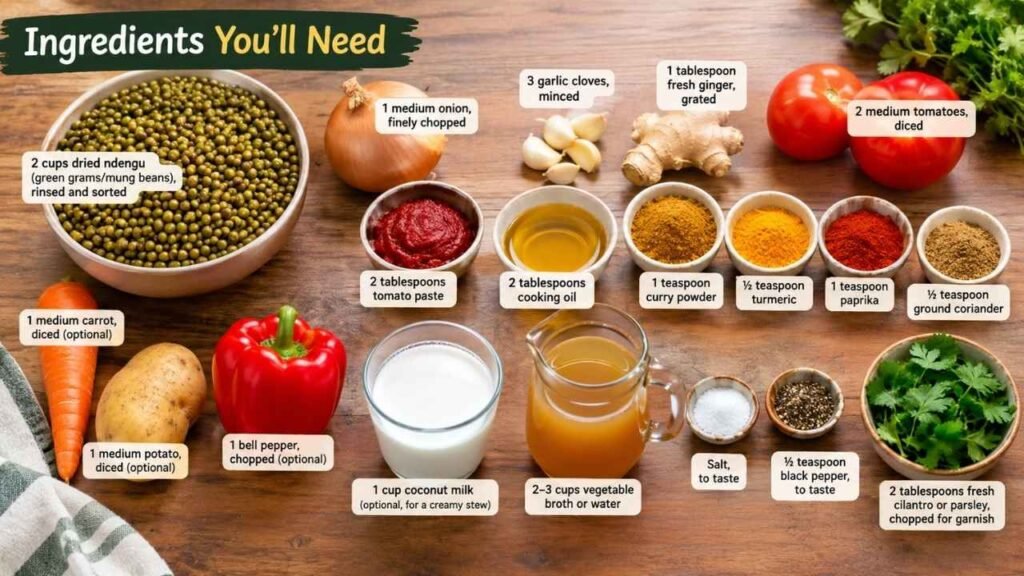
- 2 cups dried ndengu (green grams/mung beans), rinsed and sorted
- 1 medium onion, finely chopped
- 3 garlic cloves, minced
- 1 tablespoon fresh ginger, grated
- 2 medium tomatoes, diced
- 2 tablespoons tomato paste
- 2 tablespoons cooking oil
- 1 teaspoon curry powder
- ½ teaspoon turmeric
- 1 teaspoon paprika
- ½ teaspoon ground coriander
- 1 medium carrot, diced (optional)
- 1 medium potato, diced (optional)
- 1 bell pepper, chopped (optional)
- 1 cup coconut milk (optional, for a creamy stew)
- 2–3 cups vegetable broth or water
- Salt, to taste
- ½ teaspoon black pepper, to taste
- 2 tablespoons fresh cilantro or parsley, chopped for garnish
Optional Add-ins
One of the best things about this Ndengu recipe is how easy it is to customize. If you enjoy creamy stews, stir in coconut milk during the final simmer for a richer texture and a gentle sweetness.
You can also add diced potatoes, carrots, bell peppers, spinach, or kale to make the green grams stew even more filling. For extra heat, include chopped green chilies or a pinch of cayenne pepper.
Some families like adding fresh cilantro just before serving for a burst of freshness. These simple additions turn a classic mung bean recipe into a meal that matches your family’s preferences. Feel free to experiment while keeping the traditional flavors of Kenyan Ndengu stew at the heart of the recipe.
Ingredient Substitutions
You don’t have to skip this Ndengu stew recipe if you’re missing an ingredient. Fresh tomatoes can replace tomato paste, while canned diced tomatoes also work well. If you don’t have coconut milk, use vegetable broth for a lighter mung bean stew or stir in a little oat or cashew milk for extra creaminess.
Fresh garlic and ginger give the best flavor, but garlic powder and ground ginger can be used in small amounts. Cilantro and parsley are both excellent finishing herbs. If curry powder isn’t available, combine turmeric, paprika, cumin, and coriander for a similar taste. These easy substitutions help you prepare an authentic Kenyan green grams recipe using ingredients already in your kitchen.
Kitchen Equipment
You don’t need special equipment to make a delicious homemade Ndengu stew. A large pot or Dutch oven is perfect for cooking the green grams and allowing all the flavors to blend together. A pressure cooker or Instant Pot is another great option if you want to reduce cooking time, especially when using dried mung beans that haven’t been soaked.
You’ll also need a sharp knife, cutting board, wooden spoon, measuring cups, and measuring spoons for accurate preparation. A blender is optional if you prefer a smoother tomato base, but it’s not necessary. With these basic kitchen tools, preparing a hearty Kenyan mung bean stew becomes simple, enjoyable, and stress-free for cooks of any skill level.
Should You Soak Ndengu?
Soaking ndengu (green grams) is optional, but it offers several benefits. If you soak the beans for 6–8 hours or overnight, they cook faster and become softer with less simmering time. This is especially helpful when making a large batch of Kenyan Ndengu stew. If you’re short on time, you can cook dried mung beans without soaking, although they will need a longer cooking time.
Always rinse and sort the beans before cooking to remove any small stones or damaged beans. Whether soaked or unsoaked, cook the beans until they are tender before adding the tomato and spice mixture. This simple step helps create a flavorful, creamy Ndengu stew recipe with the perfect texture every time.
How to Make Ndengu Stew
- Prepare the ndengu. Rinse the dried ndengu (green grams) thoroughly under cold water and remove any small stones or damaged beans. If you’ve soaked them overnight, drain and rinse them again.
- Cook the beans. Place the ndengu in a large pot and cover with fresh water or vegetable broth. Bring to a boil, then reduce the heat and simmer until the beans are tender, about 45–60 minutes (or 20–25 minutes if soaked). Drain any excess liquid if needed.
- Sauté the aromatics. Heat the cooking oil in a separate large pot over medium heat. Add the chopped onion and cook until soft and translucent, about 4–5 minutes. Stir in the garlic and ginger, then cook for 1 minute until fragrant.
- Build the sauce. Add the diced tomatoes and tomato paste. Stir in the curry powder, paprika, turmeric, and ground coriander. Cook for 5–7 minutes, stirring occasionally, until the tomatoes break down into a thick, flavorful sauce.
- Add the vegetables. Mix in the diced carrots, potatoes, and bell pepper if using. Cook for 5 minutes to soften the vegetables slightly.
- Combine everything. Add the cooked ndengu to the tomato mixture and pour in the vegetable broth or water. If you prefer a creamy Kenyan Ndengu stew, stir in the coconut milk at this stage.
- Simmer the stew. Let the stew simmer over low heat for 10–15 minutes, allowing the flavors to blend. Stir occasionally and add more broth if the stew becomes too thick.
- Season and serve. Taste the stew and adjust the salt and black pepper as needed. Garnish with freshly chopped cilantro or parsley, then serve your Ndengu stew hot with chapati, ugali, or steamed rice.
Expert Cooking Tips
A few simple techniques can make your Ndengu stew recipe even better. Cook the green grams until they are fully tender before adding them to the tomato mixture, as this helps create the best texture. Let the onions cook slowly until soft and lightly golden to build a richer flavor.
Stir the spices into the oil for a minute before adding tomatoes so they release their aroma. If the stew becomes too thick, add a little vegetable broth or water. For a creamier mung bean stew, stir in coconut milk near the end of cooking. Finally, let the stew rest for five minutes before serving so the flavors blend together beautifully.
Common Mistakes to Avoid
Even a simple Kenyan green grams stew can go wrong if a few important steps are missed. One common mistake is adding salt too early, which may slow the beans from becoming tender. Avoid cooking the garlic over high heat because it can burn and leave a bitter taste.
If your stew looks watery, let it simmer uncovered until it thickens naturally. On the other hand, if it becomes too thick, stir in a little broth or water. Always taste before serving and adjust the seasoning if needed. Following these simple tips will help you prepare a rich, flavorful Ndengu recipe with a smooth texture and balanced taste every time.
Delicious Variations
One of the best things about this Ndengu stew recipe is how easy it is to adapt. For a creamy version, add coconut milk during the last few minutes of cooking. If you enjoy extra vegetables, include carrots, potatoes, spinach, or bell peppers for added color and nutrition. To make the stew spicier, stir in fresh chilies or a pinch of cayenne pepper.
If you prefer a heartier meal, add cooked chicken or beef after the beans are tender. For a completely vegan and vegetarian recipe, simply use vegetable broth and plenty of fresh vegetables. These easy changes allow you to enjoy a different Kenyan mung bean stew whenever you prepare this comforting family meal.
What to Serve With Ndengu
This authentic Ndengu stew pairs well with many classic side dishes. The most popular choice is soft chapati, which is perfect for scooping up the rich, flavorful sauce. Ugali is another traditional option that complements the hearty green grams stew beautifully. If you want a lighter meal, serve it over steamed white or brown rice.
Fresh avocado slices, kachumbari, or sukuma wiki add freshness and balance to every bite. A simple green salad also works well alongside this protein-rich Kenyan stew. Whether you choose traditional or modern side dishes, these combinations turn your mung bean recipe into a satisfying meal the whole family will enjoy.
Storage & Reheating
Leftover Ndengu stew stores very well, making it perfect for meal prep. Allow the stew to cool completely before transferring it to an airtight container. Store it in the refrigerator for up to 4 days or freeze it for up to 3 months. When you’re ready to enjoy it again, thaw frozen stew overnight in the refrigerator if needed.
Reheat it gently on the stovetop over medium-low heat or warm it in the microwave, stirring halfway through. If the Kenyan Ndengu stew has thickened during storage, simply add a splash of water or broth while reheating. The flavors often become even richer the next day, making leftovers just as delicious.
Meal Prep Tips
This Ndengu recipe is excellent for meal prep because it stays fresh and reheats beautifully. Cook a large batch over the weekend and divide it into individual portions for quick lunches or dinners throughout the week. You can also cook the green grams ahead of time and freeze them separately, making future meals even faster to prepare.
Chop onions, tomatoes, garlic, and ginger in advance and keep them refrigerated until you’re ready to cook. Store each serving in airtight containers for easy grab-and-go meals. Preparing ingredients ahead of time saves effort and helps you enjoy a healthy Kenyan green grams stew whenever you need a simple, homemade meal.
Nutrition Benefits
Ndengu (green grams) are packed with nutrients that support a healthy diet. They are naturally high in plant protein, making this Ndengu stew recipe a filling choice for vegetarians and anyone looking to eat more wholesome meals. These legumes are also rich in fiber, which supports healthy digestion and helps you feel satisfied for longer.
In addition, mung beans provide important nutrients such as iron, folate, potassium, and magnesium. When combined with fresh vegetables, herbs, and spices, this Kenyan Ndengu stew becomes a balanced meal full of flavor and nourishment. It’s a delicious way to enjoy traditional Kenyan food while adding more nutritious ingredients to your weekly menu.
FAQs
Is ndengu the same as mung beans?
Yes. Ndengu is the Swahili name for mung beans, also called green grams.
Do I need to soak ndengu before cooking?
No, but soaking helps the beans cook faster and gives them a softer texture.
Can I freeze ndengu stew?
Yes. Store it in airtight containers and freeze for up to 3 months.
What can I serve with ndengu stew?
Chapati, ugali, steamed rice, sukuma wiki, kachumbari, or fresh avocado are all excellent choices.
Can I make this recipe vegan?
Absolutely. Use vegetable broth and enjoy it as a hearty vegan Kenyan recipe.
Conclusion
This Ndengu stew recipe is a simple, comforting dish that brings the rich flavors of Kenyan cuisine to your kitchen. Made with green grams (mung beans), fresh vegetables, and warm spices, it’s an easy meal that’s both nourishing and satisfying.
Whether you serve it with chapati, rice, or ugali, this Kenyan Ndengu stew is sure to become a family favorite. With helpful tips, easy variations, and make-ahead options, you can prepare this wholesome recipe with confidence.
Give it a try, customize it with your favorite ingredients, and enjoy a hearty homemade meal that’s full of flavor, budget-friendly, and perfect for any day of the week.